
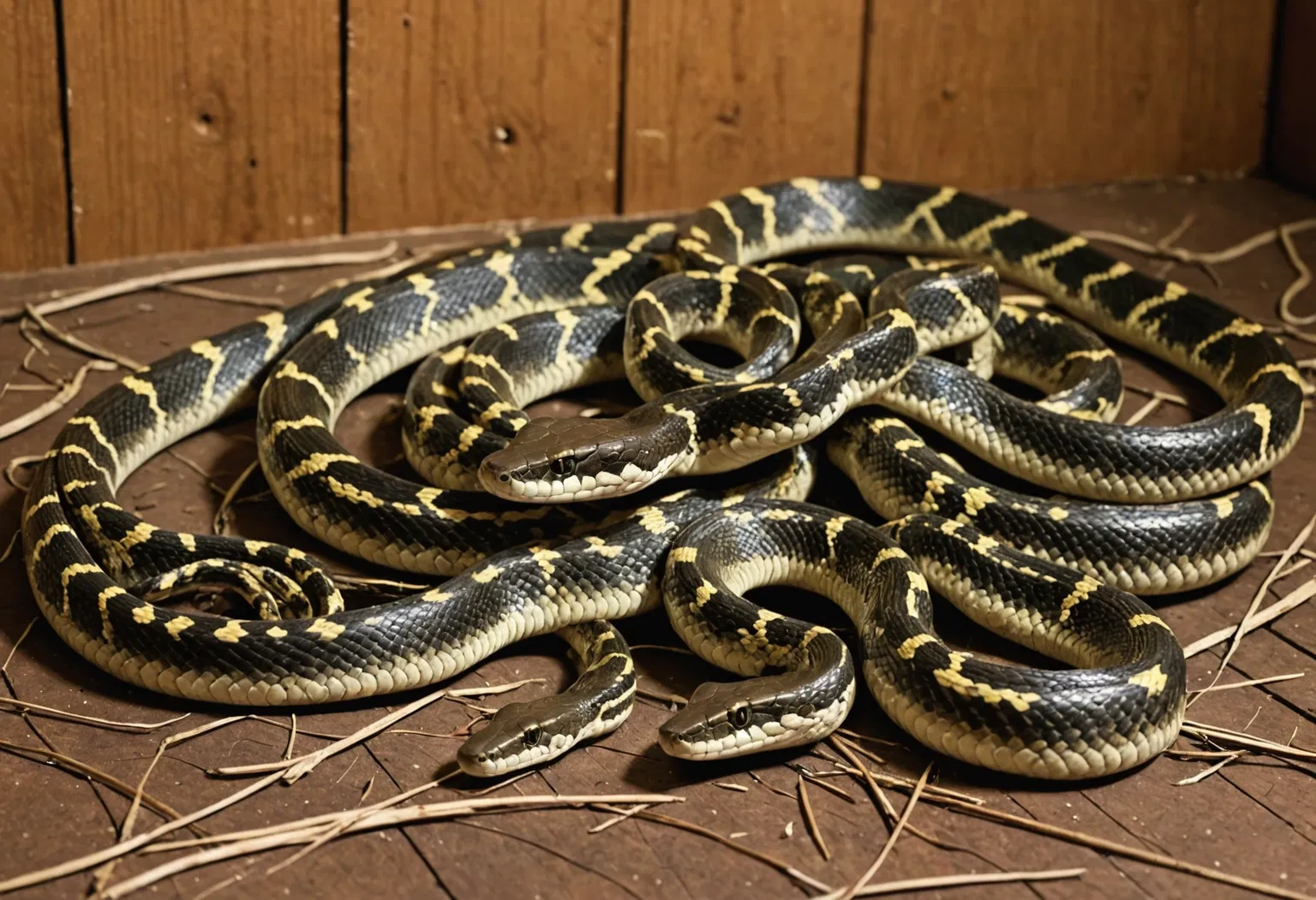
Jessica and Johnathan Perry bought their first home in Salvisa, Mercer County, Kentucky, in August — and within weeks, the property became the state's most talked-about snake infestation story. What looked like a dream purchase in the quiet countryside has turned into what the couple describes as a living nightmare, as dozens of rat snakes took over their home and forced them to launch a GoFundMe to cover mounting extermination and repair costs.
The first warning sign came within days of moving in. The Perrys told WKYT and LEX18 that they spotted two adult rat snakes and several juveniles inside the house during their first week. Over the following months, the sightings kept coming. "At this point, in just a few months," the couple said, they had already found at least 25 snakes inside the home, along with countless shed skins scattered throughout the property.
Inside the Mercer County 'Snake House': How the Infestation Unfolded
The species at the center of the story is the rat snake — specifically the gray ratsnake (Pantherophis spiloides), which is common across Kentucky. These are non-venomous constrictors that play an important ecological role by controlling rodent populations, and they pose no venomous threat to people. But the sheer number of snakes transformed the Perrys' new home into a hazardous environment, and the discovery of a hidden den made the problem far worse.
Multiple home inspections before closing did not reveal the snake den beneath the front porch. After the snakes kept reappearing, the family hired an exterminator, who placed snake traps in the basement and around the home. They also brought in a contractor to tear down the porch to find where the snakes were coming from — and that's when the source finally surfaced.
Timeline: How the Perry Family's Dream Home Turned Into 'The Snake House'
- August 2026: Jessica and Johnathan Perry purchase their first home in Salvisa, Mercer County, Kentucky, after multiple inspections find no issues.
- First week after moving in: The couple spots two adult rat snakes and several juveniles inside the home.
- Weeks that follow: Dozens more rat snakes appear, along with shed skins, prompting the couple to contact an exterminator.
- Exterminator visit: Snake traps are placed in the basement and around the property.
- Porch teardown: A contractor tears down the front porch, uncovering "dozens and dozens" of snake eggs — new and old — confirming a long-established den.
- November 2026: The story goes viral nationwide, and the family launches a GoFundMe to help cover extermination and repair costs.
When the contractor broke through the porch structure, the family reported finding "dozens and dozens of snake eggs, new and what looked like" older ones — a sign the den had been active for years. This type of gathering spot is known as a hibernaculum, a place where snakes brumate, the cold-blooded equivalent of hibernation. Somehow, it had gone unnoticed through every inspection and showing.
Why Rat Snakes Matter for Pet Owners — and How to Tell Them Apart
For pet owners, the Mercer County story is a striking reminder that even non-venomous snakes can pose real risks, especially to smaller animals. Rat snakes are not poisonous to dogs or cats, and a bite typically causes only minor injury or irritation. However, rat snakes are skilled hunters of small prey — feeding on rodents, birds, and eggs — which means pet birds, hamsters, gerbils, and small reptiles can be at genuine risk if a snake gets indoors.
The good news is that rat snakes are relatively easy to identify once you know what to look for. The gray ratsnake is a medium-to-large snake, usually 3 to 6 feet long as an adult, with darker blotches on a gray or brownish background when young — a pattern that often fades to a solid dark color with age. Adults have a white chin and a slender, slightly keeled body. In Kentucky, rat snakes are frequently confused with black racers (also non-venomous) and, more dangerously, with venomous species.
The most important identification skill for any pet owner is telling a harmless rat snake apart from Kentucky's venomous copperhead. Copperheads have a distinctive hourglass-shaped banding pattern, a triangular head, and vertical, cat-like pupils. Rat snakes, by contrast, have round pupils, a more slender head, and blotchy — rather than hourglass — markings. When in doubt, treat every snake as potentially venomous and keep pets away.
Protecting Dogs, Cats, and Small Pets From Snake Encounters
While the Perrys' situation was extreme, any home near fields, woods, or a water source can attract snakes, and pet owners should take proactive steps to reduce the risk of an encounter. Experts recommend the following measures:
- Seal entry points: Snakes can squeeze through surprisingly small gaps. Caulk cracks in the foundation, seal gaps around pipes and vents, and repair torn screens and weather stripping.
- Clear the perimeter: Remove brush piles, stacked firewood, tall grass, and debris near the house — prime hiding spots for both snakes and the rodents they hunt.
- Control rodents: Because rat snakes follow their food source, keeping mouse and rat populations down around your home removes the main attractant.
- Supervise small pets outdoors: Never leave birds, hamsters, guinea pigs, or other small pets in outdoor enclosures unattended, and keep cages elevated off the ground.
- Leash and supervise dogs in snake-prone areas: Keep dogs on a leash during walks through tall grass or near wood piles, and teach a reliable "leave it" command.
- Know your local snakes: Familiarize yourself with the venomous species in your region — in Kentucky, these include copperheads, timber rattlesnakes, and cottonmouths — so you can respond appropriately.
If you find a snake inside your home, stay calm, keep pets and children away, and call a professional wildlife removal service. If you can confidently identify the snake as non-venomous, you can use a broom and a lidded container to guide it outside — but never handle or kill a snake you cannot positively identify.
Where Things Stand Now for the Perry Family
As of early November 2026, the Perrys are still working to reclaim their home. The contractor has opened up the porch and uncovered the long-established den, and the exterminator's traps remain in place around the basement and property. The family has launched a GoFundMe campaign to help offset the costs of extermination and repairs, describing the ordeal as both personally and financially devastating.
The story has spread far beyond Mercer County, with outlets including WKYT, LEX18, Fox56, Parade, and Gray Media affiliates across the country picking it up. In headlines, the home has earned a grim nickname: "the snake house."
What Happens Next: The Road Ahead for the Perrys
Wildlife experts note that removing a decades-old snake den is rarely a one-time job. Because the hibernaculum provided shelter and access to food over many years, the Perrys will likely need to seal every entry point, address any underlying rodent population, and monitor the property through the next warm season to ensure the snakes do not return. As temperatures drop, the remaining snakes may become less active, giving the family a window to complete repairs before spring.
For pet owners watching the story unfold, the takeaway is clear: snake infestations are rare but real, and prevention — sealing entry points, clearing debris, and controlling rodents — is the best protection for both your home and the animals you love.
Key Takeaways From the Kentucky Snake House Story
- Jessica and Johnathan Perry found at least 25 rat snakes inside their newly purchased Mercer County, Kentucky home, just months after moving in.
- The source was a decades-old snake den — or hibernaculum — hidden beneath the front porch, missed by multiple pre-closing inspections.
- Rat snakes are non-venomous and not poisonous to dogs or cats, but they can threaten small pets and are easily confused with venomous copperheads.
- Prevention is key for pet owners: seal entry points, clear yard debris, control rodents, and supervise small pets outdoors.
- The family has launched a GoFundMe to cover extermination and repair costs as they work to reclaim their "dream home."