
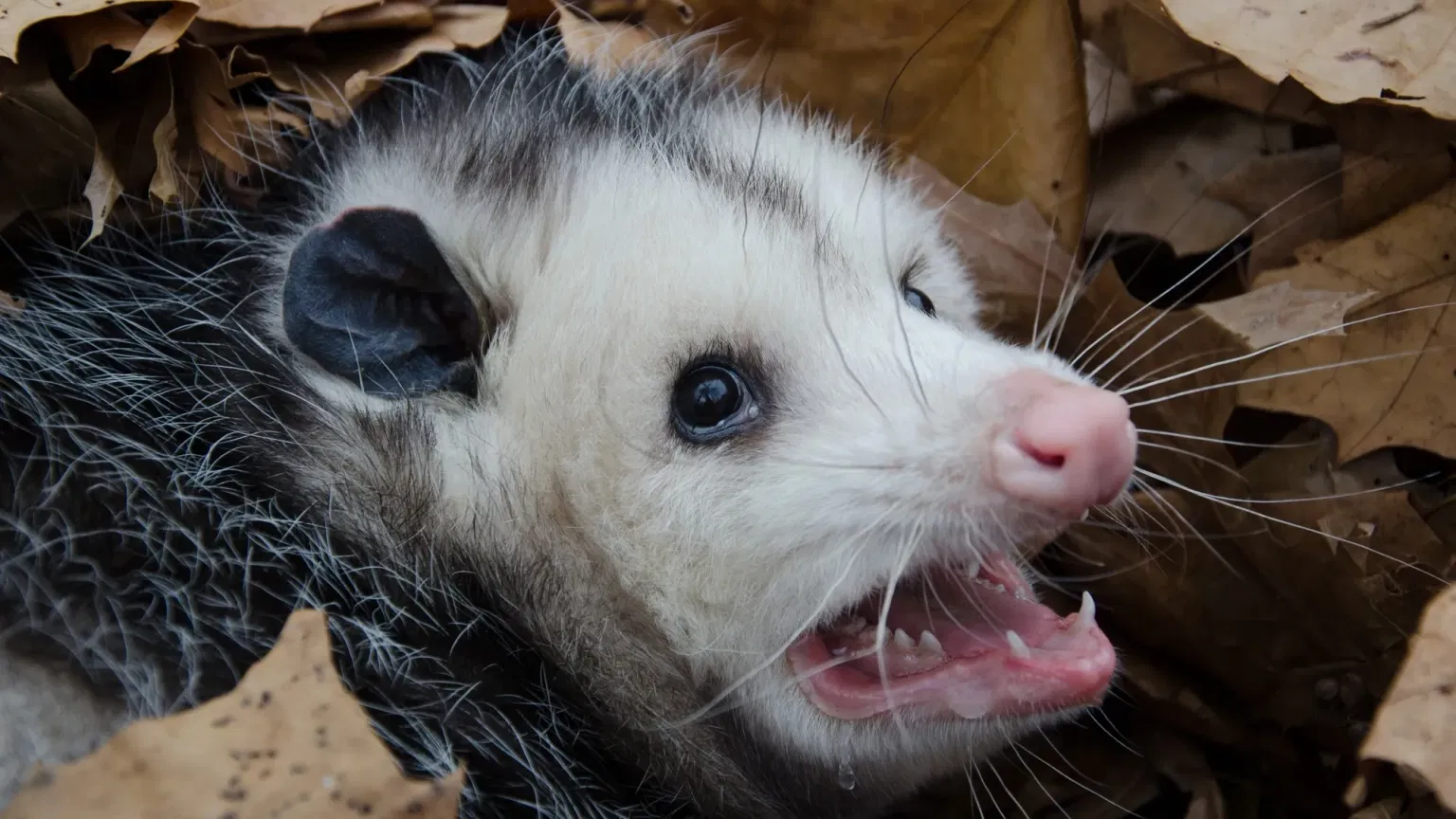
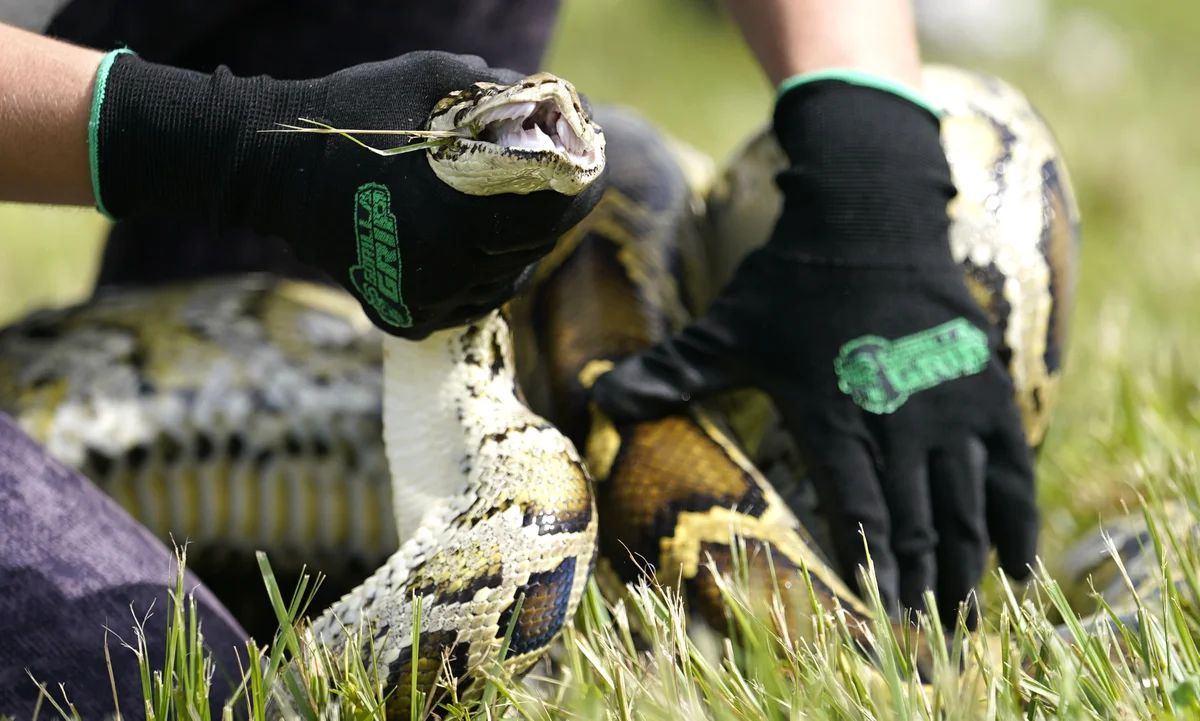
Florida's decades-long battle against invasive Burmese pythons is getting an unlikely new ally: the humble opossum. Researchers are now fitting these marsupials with GPS tracking collars, turning them into living bait that leads scientists directly to the enormous snakes that prey on them. When a python consumes a collared opossum, the tracking device continues broadcasting from inside the snake's stomach, giving conservationists a unique and effective way to locate and remove one of the most destructive invasive species in the United States.
The Burmese python (Python bivittatus) has plagued Florida's Everglades since the 1970s, when released pets established a breeding population in the subtropical wetlands. These apex predators can grow over 20 feet long and have decimated native animal populations, causing one of the most challenging ecological crises facing American wildlife conservationists today.
How an Accidental Discovery Turned Into a Python-Fighting Strategy
The innovative approach began as an accident. In 2022, wildlife biologists A.J. Sanjar and Michael Cove from the North Carolina Museum of Natural Sciences traveled to Florida to study opossum behavior, fitting the marsupials with tracking collars to monitor their movements. There was just one problem: Burmese pythons kept eating their study participants.
Each lost opossum wasn't just a setback for the research — it was expensive. The original tracking collars cost about $1,500 apiece. But rather than abandoning the project, the researchers had a breakthrough realization. The pythons that ate the collared opossums were being euthanized as part of Florida's ongoing python removal efforts. What if they could intentionally deploy opossums with tracking collars to find more snakes?
After several years of refining the concept and securing new funding, Sanjar and Cove developed tracking collars that cost just $190 each — a fraction of the original price. The Crocodile Lake National Wildlife Refuge in Key Largo will serve as the testing ground for what researchers are calling the "opossum vs. python experiment."
Timeline: From Problem to Python Detection Method
The journey from accidental discovery to active conservation tool spans several years of innovation:
- 1970s: Burmese pythons are first introduced to Florida's Everglades, likely through released pets from the exotic pet trade.
- 2022: Wildlife biologists Sanjar and Cove begin studying opossum movements in Florida, fitting marsupials with $1,500 tracking collars.
- 2022-2023: Pythons repeatedly eat collared study subjects. Southern Illinois University graduate student Kelly Crandall's research at Crocodile Lake National Wildlife Refuge also reveals unintended data about python predation on tracked prey.
- 2023: Researchers publish the concept of using GPS-collared prey to find pythons. The Guardian reports on the method in February 2023.
- 2024-2025: Sanjar and Cove develop cheaper $190 collars and secure funding for a dedicated experiment.
- April 2026: The new experiment is announced, with plans to deploy at least 40 collared opossums by summer 2026 at Crocodile Lake National Wildlife Refuge.
Why This Method Changes the Python Hunt
Finding Burmese pythons in the Florida Everglades has always been extraordinarily difficult. The snakes are masters of camouflage, perfectly evolved to thrive in the dense subtropical wetlands that cover much of South Florida. Traditional methods include ground searches, drone surveillance, and even robotic rabbits designed to lure pythons out of hiding. The Florida Python Challenge, an annual competition, encourages hunters to remove as many snakes as possible, and the state employs professional python contractors year-round.
But opossums offer a unique advantage. Unlike human hunters, these marsupials can traverse the marshy terrain effortlessly, moving through areas that are inaccessible to people. They are also a natural part of the python's diet, making them the perfect Trojan horse for infiltrating snake territory.
"We're getting [pythons] way back in areas where they may never cross the road," Sanjar told CBS12 News. "I think that's really interesting. The possums are showing us where the snakes are."
Refuge manager Jeremy Dixon emphasized that the method doesn't put opossums in additional danger. "We're not putting these animals out there and in harm's way," Dixon told the South Florida Sun Sentinel. "Harm's way is there. We're just documenting what's happening."
Where Things Stand Now: The Key Largo Experiment
The Crocodile Lake National Wildlife Refuge in Key Largo will host the initial phase of the experiment. Researchers plan to enlist at least 40 opossums by later this summer, fitting them with the newly developed $190 tracking collars. Given the area's food chain dynamics, it's nearly certain that some of these marsupials will meet their end in the tightening coils of a Burmese python.
But unlike before, their deaths won't be a loss — they'll be a lead. The tracking collars are designed to emit a mortality signal when the animal stops moving for an extended period. Researchers can then follow that signal, even if it's coming from inside a python's digestive system, allowing them to locate and humanely euthanize the invasive snake.
Dixon remains optimistic about the method's potential. "The possums are showing us where the snakes are," he said, highlighting how this approach could complement existing python removal efforts across the state.
What's Next for Python Control in Florida
Sanjar hopes that land managers across Florida will adopt the tracking method alongside other removal strategies. The approach could be particularly valuable in remote areas where traditional hunting methods are impractical. If successful, the opossum tracking program could become a standard tool in Florida's python management arsenal.
Other methods continue to evolve as well. The state's Python Elimination Program has removed thousands of snakes from the Everglades, and the annual Florida Python Challenge draws participants from around the world. But with Burmese pythons firmly established across thousands of square miles of South Florida, eradication remains a long-term goal rather than an immediate prospect.
Key Takeaways: Possums vs. Pythons
- Innovative method: GPS-collared opossums lead researchers to pythons when the snakes eat them, with the collar transmitting from inside the python's stomach.
- Accidental discovery: The technique was discovered when pythons kept eating study animals during a 2022 opossum behavior survey.
- Cost reduction: Collar costs dropped from $1,500 to $190, making large-scale deployment feasible.
- Key Largo experiment: At least 40 opossums will be deployed at Crocodile Lake National Wildlife Refuge by summer 2026.
- Complementary tool: The method works alongside other removal strategies like the Florida Python Challenge, professional contractors, and innovative lures like robotic rabbits.