
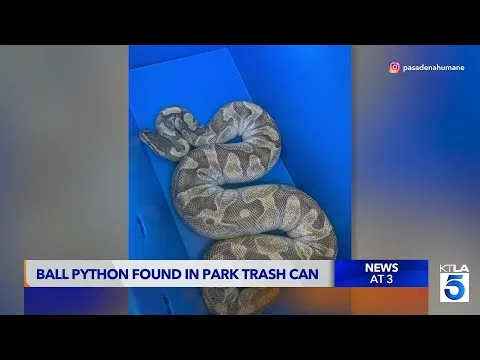
A four-foot-long ball python is resting safely in a temperature-controlled enclosure after being rescued from an unlikely hiding place: a trash can at Brand Park in Glendale, California. The startling discovery was made by a park maintenance worker on Monday morning, and the rescue that followed has reignited conversation about what happens when exotic pet owners feel they can no longer care for their animals.
The worker was making a routine check of the park's trash cans when he peered inside one and spotted something he never expected to find — a ball python curled up at the bottom. Rather than try to handle the snake himself, he quickly called for help, setting in motion a response that would involve animal services officers and one of Southern California's best-known reptile rescuers.
Inside the Rescue at Brand Park
Brand Park, located at 1601 West Mountain Street in Glendale, is a popular public green space in the foothills of the Verdugo Mountains that draws hikers, families and dog walkers throughout the week. On Monday, it became the unlikely scene of an animal rescue.
According to Pasadena Humane, an animal services officer identified as Officer McElvain responded to the call and helped retrieve the snake from the trash can. The animal, described as a roughly four-foot-long ball python, was far from any environment it could survive in on its own. Native to the grasslands of West and Central Africa, ball pythons are not built for the cool, dry conditions of a Southern California winter.
Ball pythons are known for their calm, non-aggressive nature, which is a big part of why they have become a staple of the reptile pet trade. They rarely bite and tend to curl into a ball when frightened — the very behavior that gives them their name — which likely helped the Glendale snake stay calm while it waited inside the trash can.
KTLA reported that the python, reportedly named Apples, was suffering from a severe mouth infection, a condition reptile keepers call stomatitis, or more commonly mouth rot. The infection is frequently linked to stress, poor husbandry or untreated illness, and rescuers believe it points to a snake that had been neglected before being left behind.
Joseph Hart, a reptile specialist known across the region as the Reptile Hunter, stepped in to help rescue and rehabilitate the animal. Hart has spent years responding to abandoned and injured snakes around Los Angeles, and the Brand Park python joins a growing list of reptiles he has helped pull from dumpsters, bins and other dangerous spots.
Timeline: How the Rescue Played Out
The discovery and rescue unfolded quickly over the course of a single morning:
- Monday morning: A maintenance worker at Brand Park opens a trash can and finds a four-foot ball python curled up inside.
- Call for help: The worker alerts authorities, and Pasadena Humane Officer McElvain responds to the park.
- Recovery: The snake is carefully removed from the trash can and taken into care.
- Health check: Rescuers discover the python has a severe mouth infection, suggesting it had likely been dumped by an overwhelmed owner.
- Ongoing care: The python is now resting in a temperature-controlled enclosure while receiving treatment and evaluation.
Why This Rescue Matters for Pet Owners
The Glendale rescue is more than a curious local news item. It is a reminder of the long-term commitment that comes with keeping reptiles, and of the specific care that creatures like ball pythons require to stay healthy.
Ball pythons are among the most popular pet snakes in the United States thanks to their calm temperament and relatively modest adult size. But they still demand precise, ongoing husbandry that first-time owners often underestimate. Reputable care guides recommend maintaining a thermal gradient inside a ball python's enclosure, with a warm side around 88 to 92 degrees Fahrenheit and a cooler side between 75 and 80 degrees. Ambient humidity should generally sit between 50 and 60 percent, climbing to around 70 percent during a shed.
Without the right heat, humidity and secure hiding spots, ball pythons can develop respiratory infections, stuck sheds and, as appears to be the case in Glendale, painful mouth infections. Mouth rot does not heal on its own. Treatment typically requires a veterinarian to clean away dead tissue and prescribe antibiotics, and severe cases can become life-threatening if left untreated.
Veterinary care for reptiles can be harder to find and more expensive than care for cats and dogs, which is one reason some owners become overwhelmed. Ball pythons also live far longer than many people expect, and their heating, lighting and humidity needs add up over time. When a keeper can no longer afford or manage that care, experts say the responsible options are to rehome the animal through a rescue or shelter — never to leave it outside in a bin.
Animal welfare groups urge anyone who can no longer care for a pet snake to reach out to a shelter, rescue or reptile specialist rather than releasing or dumping the animal, which is both dangerous for the snake and often illegal. Authorities say it is still unknown exactly where the Glendale python came from or how long it had been sitting in the trash can. What is clear, rescuers say, is that the snake was fortunate to be found before cold temperatures, predators or the trash collection process put it in even greater danger.
Where Things Stand Now
As of the latest reports, the ball python is in stable condition and resting in a temperature-controlled enclosure where it can stay warm and safe while it recovers. The snake is expected to continue receiving treatment for its mouth infection while rescuers and shelter staff monitor its condition.
Pasadena Humane and local reptile rescuers are also asking the public to stay alert around trash bins and dumpsters, and not only because of snakes. Trash attracts rodents, and rodents in turn attract snakes, so residents are urged to keep lids secured and to report any abandoned or injured reptile to animal services or a licensed specialist rather than approaching it themselves.
What Happens Next for the Rescued Python
If the snake makes a full recovery, it could eventually be placed with an experienced reptile keeper or a licensed rescue equipped to meet its long-term needs. Ball pythons can live 20 to 30 years or more in captivity, so any permanent home must be prepared for a commitment measured in decades rather than months.
The incident may also fuel renewed discussion about the exotic pet trade and the responsibilities that come with it. Rescuers say abandonment is a recurring problem across the region, and the Brand Park python is one of several snakes found in and around trash cans, dumpsters and driveways in recent months. Experts hope the story encourages prospective owners to research reptile care thoroughly before bringing one home, and to have a plan in place if their circumstances change.
Key Takeaways
- A four-foot ball python was found inside a trash can at Brand Park in Glendale on Monday morning.
- A park maintenance worker made the discovery and alerted authorities.
- Pasadena Humane responded, and reptile specialist Joseph Hart helped with the rescue.
- The python had a severe mouth infection and appeared to have been dumped by an overwhelmed owner.
- The snake is now recovering in a temperature-controlled enclosure.