
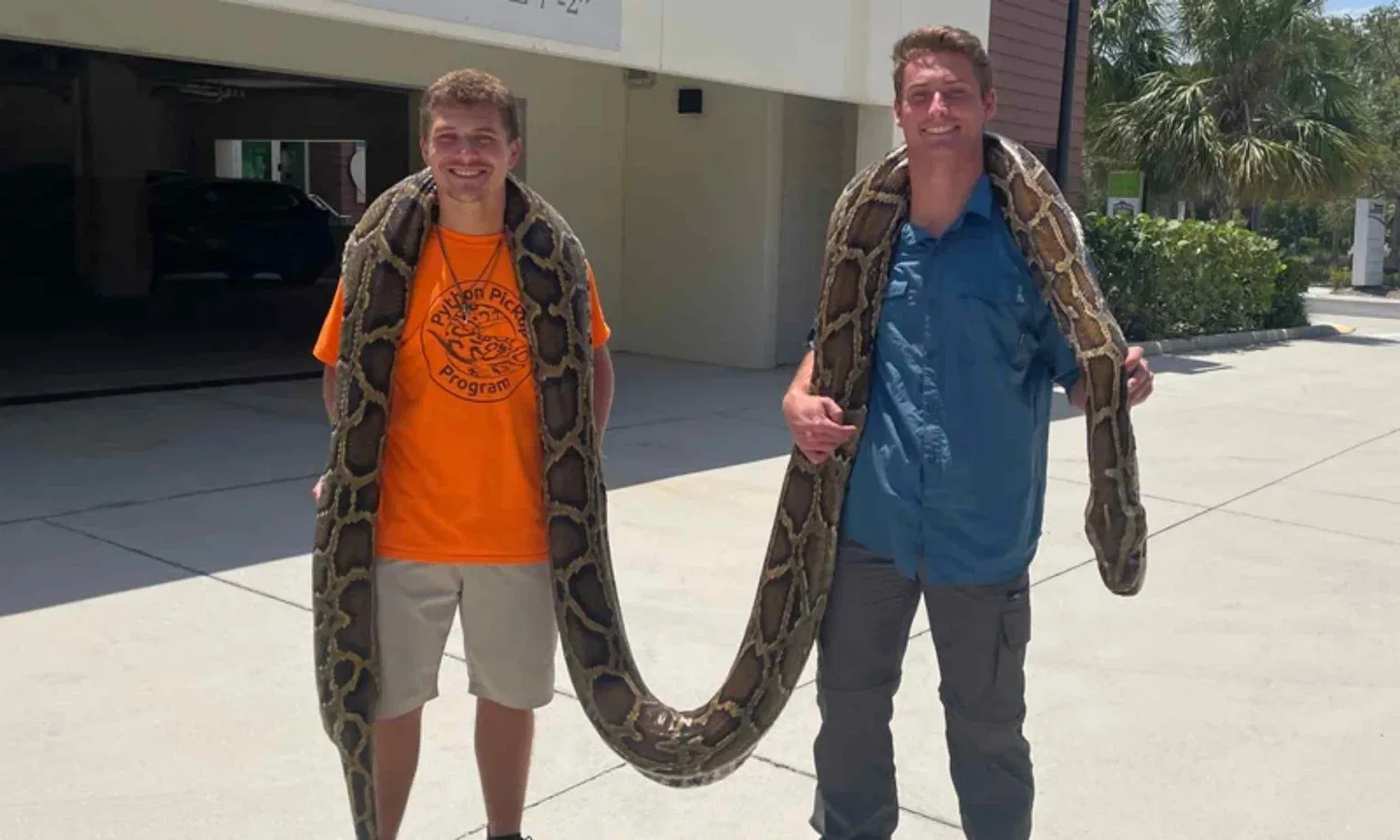
In a startling discovery that underscores the relentless spread of invasive Burmese pythons across South Florida, a snake hunter has uncovered two neighboring nests in the Everglades containing approximately 120 eggs. The find, made by python hunter Kevin Pavlidis, highlights the staggering reproductive capacity of these giant constrictors and serves as a sobering reminder of why responsible pet ownership matters when it comes to exotic reptiles.
Inside the Discovery: Two Nests, 120 Eggs
Pavlidis, an experienced python hunter working in the Florida Everglades, stumbled upon two massive Burmese python nests positioned almost side by side. Combined, the nests held roughly 120 eggs — a数量 that represents the potential for dozens of new predators to enter an already strained ecosystem. Burmese pythons are not native to Florida, and each clutch can contain anywhere from 22 to 84 eggs, with an average of around 49 per nest. The discovery of two nests in such close proximity suggests that multiple large breeding females are actively reproducing in the area.
The find comes amid a year of record-breaking python activity in Florida. The 2025 Florida Python Challenge saw 294 snakes removed in just 10 days, the highest number since the competition began. Taylor Stanberry took home the $10,000 grand prize after capturing 60 Burmese pythons during the event. Yet despite these efforts, biologists estimate that only about 1% of the python population is ever seen or captured, meaning the true number of snakes slithering through the Everglades remains unknown.
Why the Everglades Crisis Matters for Pet Owners
The Burmese python crisis in Florida is a direct consequence of the exotic pet trade. These magnificent snakes, native to Southeast Asia, can grow over 18 feet long and weigh more than 200 pounds in captivity. They have lifespans of 15 to 25 years and require specialized care that many owners are unprepared to provide. When owners can no longer manage their size, feeding requirements, or housing needs, some make the irresponsible choice to release them into the wild.
Florida's subtropical climate allows these tropical reptiles to thrive. As Analise Fussell, a master's student at the University of Florida studying invasive species, explains: "Our climate and geographic location make this a prime place. The exotic pet trade has definitely exacerbated this. Reptiles and amphibians just thrive, and Florida laws are just too lax to combat this."
The ecological toll has been catastrophic. Since 1997, raccoon populations have declined by 99.3%, opossums by 98.9%, and bobcats by 87.5% in areas where pythons are established. Marsh rabbits, cottontail rabbits, and foxes are now considered locally extinct across most of the python-invaded range. The snakes also consume birds, alligators, and other reptiles, unraveling the Everglades food web.
What's Happening Now: Florida's Fight Against the Invasion
Florida wildlife officials are employing an arsenal of innovative strategies to combat the python population. Researchers are using radio-tagged "scout snakes" — male pythons fitted with tracking devices that lead hunters to breeding females. Specially trained sniffer dogs can detect pythons hiding in dense brush. Even robotic rabbits have been deployed, luring snakes into striking range and then sending GPS alerts when attacked.
The annual Florida Python Challenge, now in its 2025 edition, rallies hunters and conservationists to remove as many snakes as possible. But experts caution that eradication is no longer feasible. "Long-term management is the realistic way. Eradication isn't feasible," says Fussell.
Beyond direct removal, researchers have discovered that Burmese pythons brought more than just themselves. An Asian lungworm parasite called Raillietiella orientalis has hitchhiked into Florida with the pythons and is now infecting and killing native snake species across at least 35 counties.
What's Next: The Road Ahead for Python Management
Scientists warn that Burmese pythons are likely to continue expanding their range northward as climate change warms Florida's environment. "It's likely we'll see more impacts than we already do," says Ashlynn Canode, a UF researcher studying snake pathogens. This means the window for preventing similar invasions is narrowing.
For the exotic pet community, the lesson is clear: prevention is far more effective and cheaper than control. Stricter regulations on the pet trade, public education about the commitment required to keep giant constrictors, and humane alternatives for owners who can no longer care for their animals are all essential to preventing the next python crisis.
"Policy needs to become stronger, so the Everglades doesn't become even more of an invasion ground," Fussell reflects. "And that starts with education — understanding what goes on in and around our backyard."
Key Takeaways for Responsible Reptile Owners
- Know before you buy: Burmese pythons can reach 18+ feet and 200+ pounds. They require large, secure enclosures and a lifelong commitment of 15–25 years.
- Check local laws: Burmese pythons are illegal to keep as pets in some states and require permits in others. Always verify regulations before acquiring one.
- Never release a pet into the wild: Releasing unwanted exotic pets is illegal in Florida and contributes directly to the invasive species crisis.
- Seek alternatives: If you can no longer care for a large constrictor, contact reptile rescues, zoos, or sanctuaries rather than releasing it.
- Report sightings: If you spot a Burmese python in Florida, report it to the FWC's Exotic Species Hotline. Do not attempt to handle large constrictors unless properly trained.