
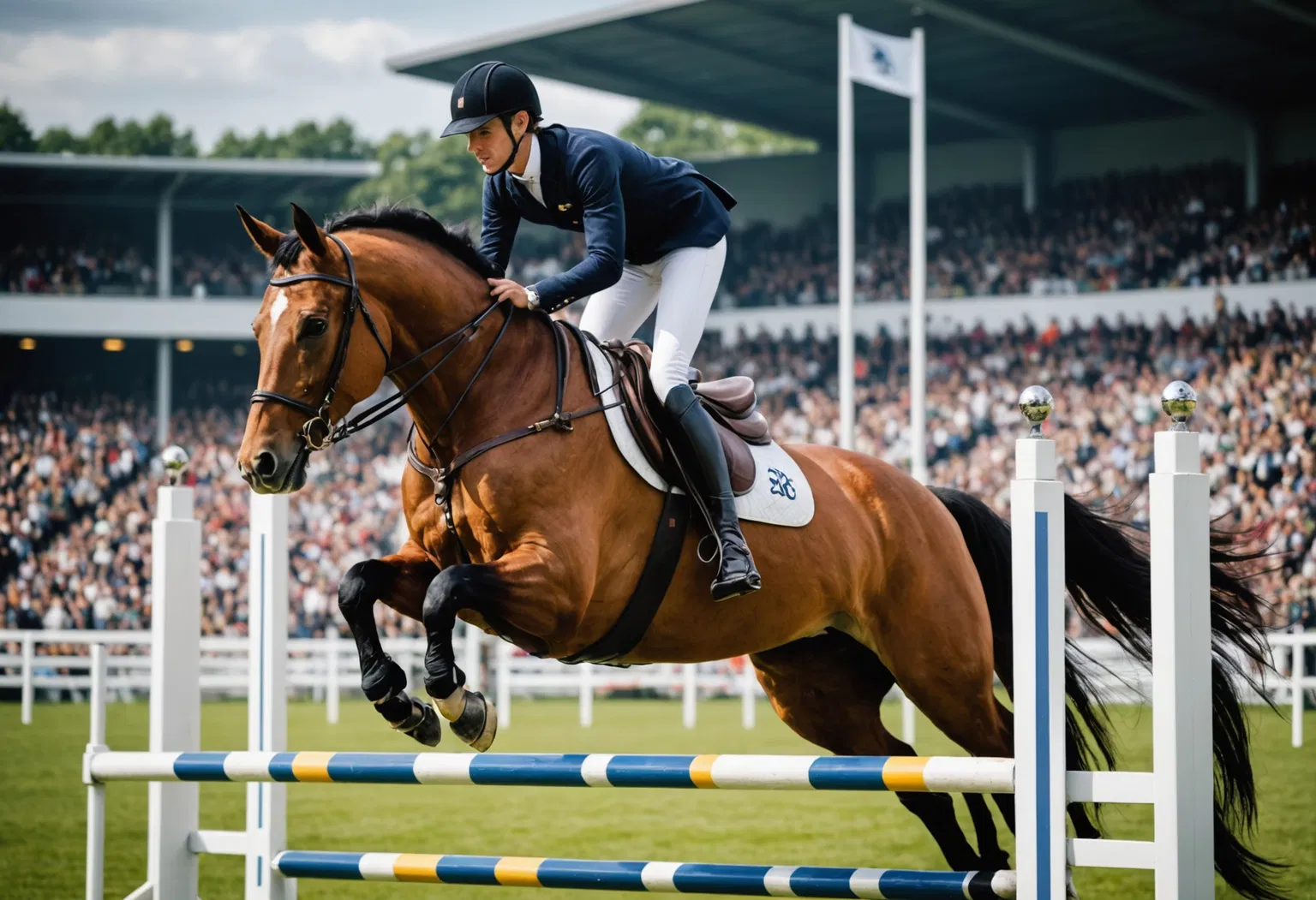
Show jumping — one of the most electrifying disciplines in the equestrian world — wrote a new chapter in its history in 2026, headlined by Switzerland's Steve Guerdat soaring to individual gold at the FEI Jumping World Championship in Aachen, Germany, aboard his brilliant Selle Français mare Dynamix de Belhème.
The August showcase doubled as a defining moment for the sport's elite equine athletes, with Germany claiming team gold on home soil, Belgium taking silver and Great Britain securing bronze. For horse lovers, the real stars of the story are the horses themselves: warmblood athletes that represent the pinnacle of selective breeding, meticulous care and years of patient, science-based training.
Germany Untouchable at Home, Guerdat Delivers Five Clear Rounds
At the FEI Jumping World Championship, held from 11 to 23 August 2026, the host nation proved untouchable in the team competition. Germany's squad rode to team gold in front of a roaring Aachen crowd, with Belgium finishing second and Great Britain completing the podium, according to World of Showjumping and Olympics.com.
The individual crown, however, belonged to a genuine show jumping legend. Steve Guerdat of Switzerland and Dynamix de Belhème — a 13-year-old Selle Français mare — produced the performance of the championship, emerging as the only combination to jump five clear rounds across the entire week. Guerdat finished on a near-flawless 0.86 time penalties, sealing a title that added individual World Championship gold to the pair's Olympic silver medal from Paris 2024.
Dynamix de Belhème, bred by Frédéric Aimez and sired by Snaike de Blondel out of Soudaine de Montet (by Cornet Obolensky), is a textbook example of why the Selle Français studbook continues to dominate international show jumping.
Timeline: From Olympic Debut to a Historic 2026 Season
Show jumping traces its roots to fox hunting in the English countryside, where riders needed horses capable of clearing fences at speed. The discipline made its first Olympic appearance at the Paris Games of 1900, and the modern format took shape in 1912 — a structure that has thrived ever since.
Understanding the stakes requires a quick look at how the sport is scored. Under the most common format, Table A, a knockdown or a first refusal adds four penalty points, while time faults are added for every second over the course's allowed time. The winner is the combination with the fewest faults in the fastest time — which is why a single clear round, let alone five, is such a rare and celebrated achievement.
The past two seasons have been especially memorable:
- April 2025 — France's Julien Epaillard wins the Longines FEI Jumping World Cup Final in Basel, Switzerland, aboard Donatello d'Auge, leading wire-to-wire.
- April 2026 — American Kent Farrington captures his first-ever World Cup title in Fort Worth, Texas, riding Greya to victory on just four total penalties.
- August 2026 — Steve Guerdat and Dynamix de Belhème are crowned individual World Champions in Aachen, with Germany taking team gold.
- October 2026 — The 2026–2027 World Cup season gets underway, while the Selle Français studbook is ranked top of the WBFSH Jumping rankings for a fourth straight year.
Why the Horses Matter: Breeds, Care and Training Behind the Sport
At its core, show jumping is a celebration of equine athleticism. The horses that reach the top are overwhelmingly warmbloods — Selle Français, Belgian Warmbloods and Dutch Warmbloods (KWPN) — bred over generations for powerful hindquarters, an elastic jump and a willing, trainable temperament.
The Selle Français, the breed of Guerdat's Dynamix de Belhème, is renowned for its elegance, powerful impulsion and an eager-to-please, almost dog-like disposition that makes it a favourite among riders. The Belgian Warmblood is equally dominant in show jumping, prized for its strong limbs, excellent jumping technique and natural ability to clear high obstacles. Dutch Warmbloods blend agility, strength and a keen willingness to work, making them highly valued in the ring.
Reaching championship level demands rigorous care. Elite show jumpers typically train 20 to 30 hours per week, combining grid and pole exercises to sharpen technique with hill work and flatwork to build strength and endurance. Nutrition is equally important: research shows elite show jumpers thrive on relatively higher-forage, lower-concentrate diets that support digestive health and steady energy levels.
Joint health is a top priority for these high-impact athletes. Veterinarians recommend maintaining a balanced calcium-to-phosphorus ratio in the diet, keeping horses at an appropriate body condition, and starting proactive joint care well before signs of inflammation appear. The sport has also increasingly embraced the Five Domains welfare model — nutrition, environment, health, behaviour and mental state — to safeguard the well-being of competing horses.
Where Things Stand Now: A New Season Underway
As autumn 2026 unfolds, the international circuit is in full swing. The Longines FEI Jumping World Cup 2026–2027 season launched with qualifiers across the globe, including an October stop in Upper Marlboro, Maryland, and the traditional early-season legs in Europe. Timm Peters was recently named WBFSH Jumping Breeder of the Year 2026, and the FEI Awards Gala will honour the sport's standout performers in Jiangyin, China, on 5 December.
Fort Worth's podium also highlighted the breadth of talent at the top: behind Farrington's Greya, Germany's Daniel Deusser took silver on Otello de Guldenboom, while American Katie Dinan — a Ph.D. student and the highest-placed female rider — claimed bronze aboard Out of the Blue SCF, a 12-year-old U.S.-bred Belgian Warmblood mare.
What Happens Next: The Road to Los Angeles 2028
With the 2026 World Championships complete, attention turns to the next major milestones on the show jumping calendar. The immediate focus is the 2026–2027 World Cup season, which builds toward the World Cup Finals next spring. Beyond that, the sport's brightest stars will set their sights on the Los Angeles 2028 Olympic Games, where riders such as Guerdat, Farrington and Germany's rising talents will look to translate championship form into Olympic gold.
For horse lovers, the storyline remains compelling: a new generation of homebred warmbloods is emerging, and the growing emphasis on welfare, nutrition and science-based training promises to keep the sport's equine athletes healthier, happier and more competitive than ever.
The Bottom Line: Key Points to Remember
- Steve Guerdat (SUI) won individual gold at the 2026 FEI Jumping World Championship in Aachen aboard the Selle Français mare Dynamix de Belhème, jumping five clear rounds.
- Germany took team gold on home soil, with Belgium silver and Great Britain bronze.
- Kent Farrington (USA) claimed his first World Cup title in Fort Worth in April 2026 on Greya, ahead of Daniel Deusser (silver) and Katie Dinan (bronze).
- Warmblood breeds — Selle Français, Belgian and Dutch Warmbloods — dominate the sport, with Selle Français topping the WBFSH rankings four years running.
- Top-level show jumping hinges on rigorous training (20–30 hours weekly), forage-based nutrition and proactive joint care.