
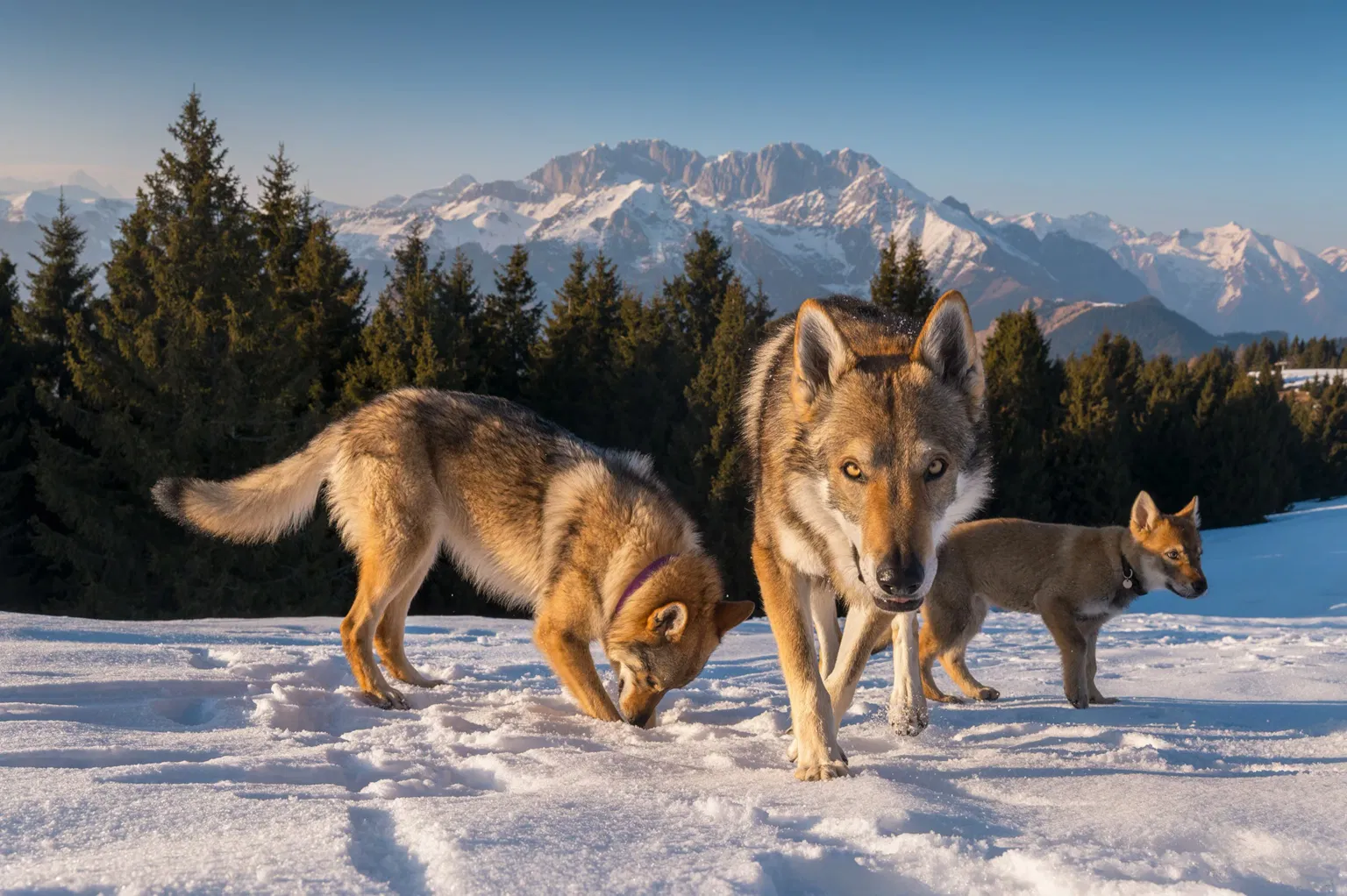
Wolf populations are making a remarkable comeback across North America and Europe, with Washington state reporting a 17% increase in its gray wolf population in 2025 and European wolves surging by nearly 60% over the past decade. This conservation success story comes as demand for wolf-dog hybrid pets reaches unprecedented levels, creating both opportunities and challenges for pet owners and wildlife managers alike.
Washington's Wolves Reach Record Numbers
Washington's gray wolf population has reached its highest level since monitoring began, with the Washington Department of Fish and Wildlife reporting 270 wolves across 49 packs and 23 breeding pairs at the end of 2025. This represents a 17% increase from the previous year's count of 230 wolves, 18 breeding pairs, and 43 packs. The recovery marks a significant rebound following a decline in 2024, with six new or reestablished packs contributing to the growth.

"We confirmed six new or reestablished packs in the annual count," said WDFW Wolf Biologist Trent Roussin. "Those that reestablished include the Salmo, Smackout, and Vulcan packs in northeast Washington. New packs include the Cameron Lake pack on the Confederated Tribes of the Colville Reservation and the Billy Goat and Tupshin packs in the North Cascades Recovery Region."
Despite concerns about human-wolf conflicts, only five of the 49 existing packs (10%) were involved in confirmed or probable livestock injuries or mortalities in 2025. A total of 17 depredation events involved 19 cattle, with eight calves confirmed killed by wolves and eight confirmed injured. "That leaves 90% of known packs that were not involved in any known depredations in 2025," noted Roussin, "despite most pack territories overlapping livestock operations on both public and private lands."
Europe's Wolf Recovery: A Conservation Success Story
Across the Atlantic, wolf populations in Europe have increased by nearly 60% in just one decade, according to a study published in PLOS Sustainability and Transformation. Researchers led by Cecilia Di Bernardi and Guillaume Chapron at the Swedish University of Agricultural Sciences found that by 2022, at least 21,500 wolves lived in Europe—a dramatic increase from the estimated population of 12,000 a decade earlier.
The study analyzed data from 34 countries across Europe and found that wolf populations were increasing in most countries, with only three reporting declines over the previous decade. This recovery represents one of the most significant carnivore comebacks in modern conservation history, particularly given Europe's dense human population and heavily altered landscapes.
While wolves do cause some livestock losses—estimated at 56,000 domestic animals per year in the European Union—the risk to individual animals remains extremely low. Out of a total population of 279 million livestock, European livestock face only a 0.02% chance of being killed by wolves each year. Compensating farmers for these losses costs European countries approximately 17 million euros annually.
The Rising Demand for Wolf-Dog Hybrid Pets
As wild wolf populations recover, interest in wolf-dog hybrids as companion animals has surged to unprecedented levels. National Geographic reported in August 2025 that demand for these unique animals is creating what conservationists call "a huge problem" due to potential interbreeding with wild wolf populations and the challenges of properly caring for these complex animals.
Czechoslovakian wolfdogs, a breed developed by crossing German shepherds with Eurasian wolves, have become particularly popular in Europe. These animals typically contain between 6-25% wolf DNA and exhibit many wolf-like characteristics in appearance and behavior. While they can make loyal companions for experienced owners, they require specialized care that differs significantly from typical domestic dogs.
"The higher the content wolf, the less likely they can be kept as a house pet and will require special housing, socialization, and care," warns the International Wolf Center. "There are legal issues to consider as well—laws vary by region, and in the US, it varies at the government level."
Navigating the Complex Legal Landscape
The legal status of wolf-dog hybrids varies dramatically across jurisdictions, creating a confusing patchwork of regulations for potential owners. In the United States, no federal law specifically regulates wolf-dog hybrids, leaving regulation to individual states and local municipalities.
According to World Population Review, some states like Michigan, North Carolina, and Ohio have few restrictions on wolfdog ownership, while others like Connecticut, Hawaii, and Massachusetts have outright bans. Many states fall somewhere in between, requiring special permits or imposing specific containment requirements.
In 2025 alone, several municipalities moved to strengthen regulations. Roanoke, Virginia's City Council voted unanimously to ban ownership of wolf-hybrid dogs within city limits following incidents involving the animals. Similarly, British Columbia's Union of BC Municipalities called for provincial legislation to ban hybrid wolf-dogs, citing public safety concerns.
What Potential Owners Need to Know
Experts emphasize that wolf-dog hybrids are not suitable for most pet owners. These animals typically retain many wild instincts that can make them challenging to manage in domestic settings. They often have stronger prey drives, greater escape tendencies, and more complex social needs than typical domestic dogs.
"Wolfdogs require experienced owners who understand canine behavior and have appropriate facilities," explains the International Wolf Center. "They need secure, escape-proof enclosures, consistent socialization, and owners who can commit to their specialized needs throughout their lifespan."
Prospective owners should thoroughly research their local regulations, consult with veterinarians experienced with hybrid animals, and consider whether they can provide the necessary environment for these unique animals. Many wolfdog owners ultimately surrender their pets to sanctuaries when they cannot meet their needs, highlighting the importance of careful consideration before acquisition.
The Future of Wolves and Wolf-Dog Hybrids
As wolf populations continue to recover across their historic ranges, the relationship between humans and these iconic predators will continue to evolve. Conservationists now face the dual challenge of managing recovering wild populations while addressing the growing popularity of wolf-dog hybrids.
For wild wolves, the focus is shifting from recovery to long-term coexistence. "Considering Europe's large human population and the widespread alteration of landscapes for agriculture, industry and urbanization, the rapid recovery of wolves over the last decade highlights their extraordinary adaptability," note the authors of the European wolf study. "However, as conservationists transition from saving endangered populations to sustaining a successful recovery, the challenge will be to adapt national and international policies to ensure that humans and wolves can coexist sustainably."
For wolf-dog hybrids, the path forward involves clearer regulations, better public education, and responsible ownership practices. As conservation success brings wolves closer to human communities, and as interest in wolf-like pets grows, finding balanced approaches that protect both wild populations and domestic animals will be essential.
Key Takeaways for Pet Enthusiasts
- Wolf populations are recovering significantly in both North America and Europe, representing a major conservation success.
- Wolf-dog hybrids require specialized care and are not suitable for most pet owners due to their wild instincts and complex needs.
- Legal regulations for wolfdog ownership vary widely by location, with some areas banning them entirely.
- Prospective owners should thoroughly research both the animal's needs and local laws before considering a wolf-dog hybrid.
- Conservation success and pet ownership trends are increasingly interconnected, requiring balanced approaches to wildlife management.
The remarkable recovery of wolf populations alongside growing interest in wolf-dog hybrids represents a unique moment in human-animal relationships. As we celebrate conservation victories that have brought wolves back from the brink in many regions, we must also approach wolf-dog ownership with responsibility and respect for both the animals' wild heritage and their place in our lives.