
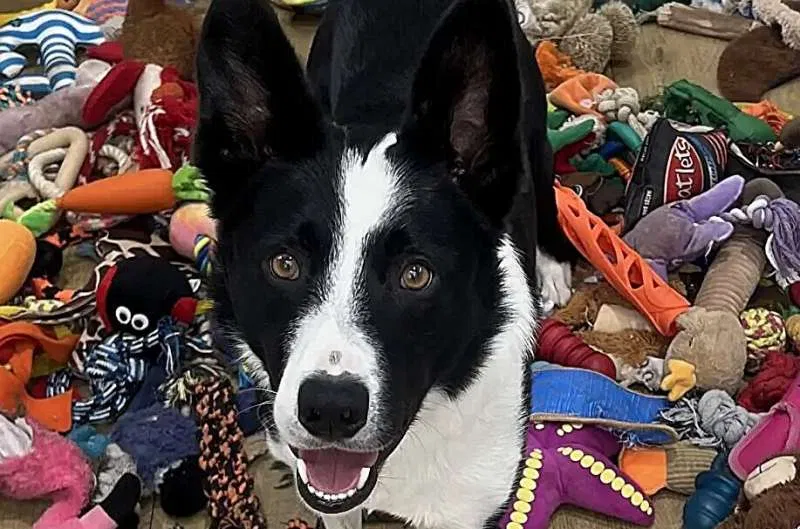
What makes some dogs capable of learning hundreds of object names while others struggle with basic commands? A groundbreaking new study published in Scientific Reports has uncovered the three key traits that separate canine geniuses from the rest: curiosity, focus, and self-control. Researchers from the University of Portsmouth and Friedrich Schiller University of Jena studied 11 rare "label-learning" dogs from five countries—dogs that can identify and retrieve objects by name alone—and found these exceptional animals share distinct cognitive characteristics that could revolutionize how we select and train service dogs.
How Scientists Uncovered the Secrets of Canine Genius
The international research team, led by Dr. Juliane Kaminski from the University of Portsmouth's Dog Cognition Center and Dr. Juliane Bräuer from Friedrich Schiller University of Jena's DogStudies Unit, conducted what they describe as the first comprehensive investigation into what makes certain dogs "label learners." These extraordinary canines can recognize hundreds of objects by their names alone, a skill so rare that only 11 such dogs could be found across the United Kingdom, United States, Switzerland, Netherlands, and Germany for the study.
Through a citizen science approach, owners of these special dogs administered eight different cognitive tests to their pets, all filmed for analysis by the research team. The tests measured everything from problem-solving and memory to communication skills and interest in novel objects. According to Dr. Kaminski, "Being able to pick out such a wide variety of objects is not something any dog can do. It is extremely rare and appears to be an inherent natural ability which is specific to the dog and not a quality that many dogs have."
The selected dogs included border collies, crossbreeds, Spanish waterdogs, and even a pug—proving that while certain breeds may be overrepresented, this exceptional ability isn't limited to any single type of dog. Each dog had to demonstrate their label-learning skills by correctly fetching named objects from a selection while unable to see their owner or any other person, eliminating the possibility of cueing from human body language.
From Rico to Harvey: The Evolution of Dog Cognition Research
The story of genius dogs begins with Rico, a border collie who made scientific history in 2004 when research published in Science demonstrated he could identify 200 different objects by name. Dr. Kaminski's interest in canine cognition actually started with Rico after seeing him on a German TV show. "I was intrigued and convinced that he was responding to other clues from his owner, but that wasn't the case," she admitted. "I am still amazed and constantly surprised by what dogs learn."

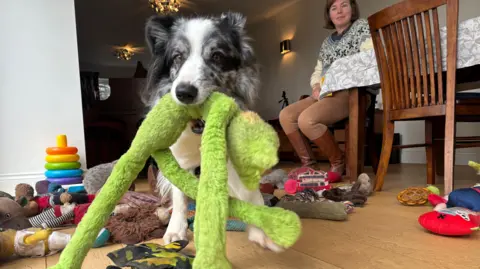
Since Rico, other notable canine geniuses have emerged, including Chaser who learned over 1,000 object names, and now Harvey, the seven-year-old border collie from Reading who knows approximately 220 different toys by name. Harvey's owner, Irene Hewlett, gives him commands in both Dutch and English and describes their daily routine as "wading through his toys" at home. "We play this game all day so it's kind of his job," she explained. "Border collies are working dogs so they need a job to keep their minds occupied."
This latest study represents nearly a decade of dedicated research at Britain's first facility exclusively dedicated to studying dog cognition at the University of Portsmouth's Langstone campus. Hundreds of dogs have participated in games and tasks designed to better understand how they interact with their environment, other dogs, and people—always with rewards of food or play and never using invasive methods.
The Three Traits That Define Canine Genius
After analyzing the cognitive test results, researchers identified three distinct characteristics that set label-learning dogs apart from their peers. These traits emerged consistently across all 11 exceptional dogs and were significantly less pronounced in the control group of typical dogs matched for age, sex, and breed.
1. Curiosity: Label-learning dogs showed a heightened interest in novel objects, spending more time examining them and looking at them more frequently than control dogs. This wasn't just a passing glance—these dogs would inspect, reconsider, and return for another look. Dr. Kaminski noted that this curiosity appears to be a fundamental driver of their learning ability, as dogs interested in understanding their world are more likely to absorb the names and functions of objects within it.
2. Focus: Unlike most dogs who might dig chaotically through a basket of toys, genius dogs demonstrated a targeted interest in specific objects. They would zero in on particular items and study them closely, forming stable associations between words and objects that most dogs treat as background noise. This ability to maintain focused attention appears crucial for building their extensive vocabulary of object names.
3. Self-Control (Inhibition): Perhaps surprisingly, inhibitory control emerged as a key differentiator. Genius dogs could override their preferences and impulses to follow instructions, whereas typical dogs often struggle with this. Dr. Bräuer illustrated this with her own non-genius dog: "She likes a ball so much that she would not fetch a ring when a ball is present." Label-learning dogs resist such impulses, making learning easier and more efficient.
Interestingly, the study found that human-focused behaviors—like looking to people for guidance—were more associated with the control group than the label learners. This suggests that independence and a stronger focus on environmental stimuli may contribute to these dogs' exceptional abilities.
What This Means for Future Dog Training and Selection
The implications of this research extend far beyond academic interest. According to the researchers, these findings represent the first step toward developing a "Puppy IQ Test" that could identify young dogs with exceptional learning potential. Such a test would be invaluable for organizations that train service dogs for people with visual or hearing impairments, as well as for police and detection work.
Dr. Kaminski explained the practical applications: "If we could identify these dogs, we could then work with charities to train dogs to assist people in their homes who would find it very beneficial if they had dogs that knew items by name and can support their owner in the household by fetching things. For charities to train any dogs, it's quite hard. But if they have these pre-tests as a way to exclude puppies or a way to find the right puppy then that would make it easier for them."
The research team emphasizes that while label-learning ability appears to be innate, it doesn't mean other dogs can't learn. Rather, it suggests that some dogs have a natural predisposition that makes certain types of learning easier. Understanding these traits could help trainers develop more effective methods for all dogs while identifying those with special potential for advanced training.
The Road Ahead: Puppy IQ Tests and Beyond
While this study provides crucial insights, the researchers acknowledge that more work needs to be done. The small sample size—while unavoidable given the rarity of these dogs—means findings need to be replicated with larger groups. Additionally, the team wants to explore whether these traits are present from puppyhood or develop over time, and whether they can be influenced by training and environment.
Dr. Kaminski stated, "We will be carrying out further research as we must explore whether these traits are part of the makeup of some individual dogs from the puppy stage, or whether they develop over time and can be influenced by training." This ongoing research could eventually lead to standardized assessments that help match dogs with the roles best suited to their natural abilities.
The study also opens new avenues for understanding canine cognition more broadly. By identifying specific cognitive traits associated with exceptional abilities, researchers can now investigate whether these traits correlate with other skills, such as problem-solving in different contexts or adaptability to new environments.
Key Takeaways for Dog Owners
For everyday dog owners, this research offers fascinating insights into what makes our canine companions tick. While few of us will own a dog capable of learning hundreds of object names, understanding the role of curiosity, focus, and self-control in learning can help us become better trainers and caregivers.
If you suspect your dog might have special learning abilities, look for signs of these three traits: Does your dog show intense interest in new objects? Can they focus on specific tasks or toys for extended periods? Do they demonstrate good self-control when faced with distractions? While these traits alone don't guarantee genius-level abilities, they're the building blocks of exceptional learning.
Perhaps most importantly, this research reminds us of the incredible diversity of canine intelligence. Just as humans have different types of intelligence and learning styles, dogs too possess individual cognitive profiles that make them uniquely suited to different roles and relationships. Whether your dog is a potential service animal superstar or simply your loyal companion, understanding their cognitive strengths can only deepen the bond you share.
The study, "What makes a dog a label-learner: individual cognitive differences underlying label-learning abilities in domestic dogs," was published in Scientific Reports on November 24, 2025, and represents a significant step forward in our understanding of canine cognition and the remarkable abilities of our four-legged friends.