
When a CBS News investigative team sent human cheek swab samples to a popular pet DNA testing company, the results came back suggesting the reporters were part Border Collie, Bulldog, and later Alaskan Malamute. This startling discovery, revealed in March 2024, has ignited serious concerns about the accuracy and reliability of the rapidly growing pet DNA testing industry—a market projected to exceed $700 million by 2030. As millions of pet owners turn to these tests to uncover breed origins, health risks, and behavioral insights, new research from the University of Colorado warns that some companies may be relying more on photographs than actual genetics.
How Dog DNA Tests Got It Wrong: Humans Identified as Canines
The CBS News I-Team first became suspicious after a pet owner received bizarre breed results for her German Shepherd. When she sent her own cheek swab to DNA My Dog, the company reported she was 40% Border Collie, 32% Cane Corso, and 28% Bulldog. The company initially insisted the sample contained canine DNA, claiming "the results provided would not be possible on a human sample." Undeterred, the I-Team repeated the test in 2024 with a reporter's sample sent to three different companies. While Orivet and Wisdom Panel rejected the human sample as insufficient, DNA My Dog once again returned canine results—this time identifying the human as 40% Alaskan Malamute, 35% Shar-Pei, and 25% Labrador Retriever.
These findings come as the pet DNA testing market experiences explosive growth. According to Zion Market Research, the global dog DNA test market is expected to reach $723 million by 2030, driven by pet humanization and increasing interest in personalized pet care. Yet the CBS investigation reveals fundamental questions about what consumers are actually paying for. "I personally do have concerns about the fact that, from a consumer standpoint, you don't always know what you're getting when you work with those companies," said Elinor Karlsson, PhD, a geneticist with the Broad Institute and UMass Chan Medical School. "There's not a lot of rules in this space."
From Suspicion to Scandal: The Timeline of DNA Testing Controversies
The current crisis didn't emerge overnight. Here's how the pet DNA testing accuracy story unfolded:
- 2021: University of Colorado researchers begin designing a study to evaluate whether dog DNA test companies rely on photographs submitted with samples.
- March 2023: CBC's Marketplace publishes investigation showing varying results from different dog DNA testing companies when analyzing the same dogs.
- February 2024: CU study published in the Journal of the American Veterinary Medical Association reveals one company (Accu-Metrics) frequently returns results matching the photograph rather than the actual DNA.
- March 2024: CBS News I-Team exposes DNA My Dog's human sample errors for the second time, prompting national attention.
- April 2024: National Geographic publishes comprehensive analysis of dog DNA test reliability, citing the CU study and warning consumers about accuracy concerns.
- April 2024: Dark Daily reports on the CBS findings, featuring expert commentary from veterinarians calling for regulatory action.
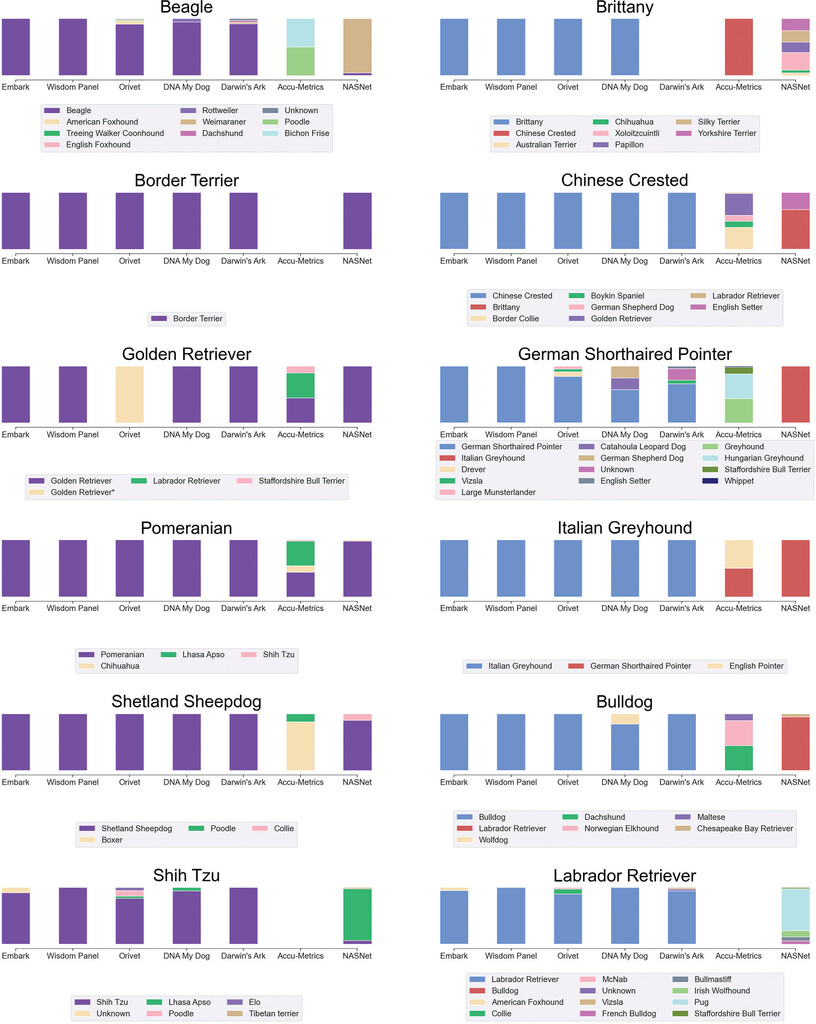
The University of Colorado study, led by data scientists Casey Greene, PhD, and Halie Rando, PhD, provides scientific validation to these concerns. Researchers submitted DNA samples from 12 registered purebred dogs to six different testing companies, sometimes pairing samples with photos of different breeds. While five companies consistently identified the correct breeds, Accu-Metrics frequently returned results that aligned more closely with the photograph than the DNA. In one striking example, the company determined a beagle was 50% poodle and 50% bichon frisé—a result that matched neither the DNA nor common sense.
Why Pet DNA Accuracy Matters: Expert Insights and Health Implications
The stakes extend far beyond curious pet owners wondering about their dog's heritage. Inaccurate DNA results can have serious consequences for pets and their families. "One of our concerns was that some of these tests can have real financial implications for a person's ability to rent, get insurance, or live in a particular city without compelling evidence that it is a valid result," Greene told EurekAlert. Breed-specific legislation in many cities restricts ownership of certain breeds, and insurance companies may deny coverage based on breed identification.

Perhaps more concerning are the health implications. Many DNA tests claim to identify genetic health risks, potentially influencing veterinary care decisions. "I worry about people making medical decisions … based on one of these tests," said Lisa Moses, VMD, a veterinarian and bioethicist with Harvard Medical School. "A breed is something that we've decided, which is based upon essentially the way a dog looks. But that doesn't necessarily mean that we're going to know what their genes look like." Moses and colleagues have called for lawmakers to set standards and regulations for pet DNA labs, including requirements to share databases for more consistent results.
Karlsson, who runs the nonprofit Darwin's Ark research initiative, emphasizes that legitimate genetic science can provide tremendous value when conducted properly. "We might be able to figure out which dogs are at risk of getting cancer, and screen them more often and be able to diagnose it earlier," she told CBS News. "We might be able to develop new treatments for that cancer." Her project has enrolled over 44,000 dogs in an open-source database shared with researchers worldwide, demonstrating how transparent, scientific approaches can advance canine health.
Where Regulation Stands: Calls for Oversight in Pet Genetics
Currently, the pet DNA testing industry operates with minimal oversight. Unlike human genetic testing, which falls under FDA regulation for medical claims, pet DNA tests exist in a regulatory gray area. The Federal Trade Commission can act against false advertising, but there are no specific standards for accuracy or methodology validation. "There isn't necessarily a gold standard answer for what your dog is," Moses acknowledged, but she argues that doesn't excuse misleading practices.
Some companies have begun responding to the scrutiny. In February 2024, US News & World Report ranked DNA My Dog's Essential Breed ID Test as the "best budget dog DNA test," despite the ongoing controversy. The company's website continues to promote breed breakdowns, genetic health concerns, and personality traits for $79.99. Meanwhile, more established companies like Embark and Wisdom Panel emphasize their scientific partnerships and larger reference databases, though even these show variations in breed percentage reporting.
The American Veterinary Medical Association has taken note of the growing concerns. Their published study represents the first systematic comparison of commercially available tests, providing veterinarians with context for interpreting results from consumer-grade kits. "Veterinarians are likely to encounter patients who have conducted DTC genetic testing and may be asked to explain the results of genetic tests they did not order," the researchers noted in their clinical relevance statement.
The Future of Pet DNA Testing: Improving Accuracy and Trust
Despite current challenges, experts believe the pet DNA testing industry can evolve toward greater reliability. Greene suggests independent evaluation through careful experimental designs is essential. "Not all tests are created equal," he told EurekAlert. "It is important the services are evaluated independently with careful experimental designs to understand their strengths and weaknesses. That's part of what we contribute as scientists."
Several pathways could improve industry standards:
- Transparency: Companies could disclose their reference panel sizes, marker densities, and validation methods.
- Database Sharing: Creating shared breed databases would reduce discrepancies between companies.
- Regulatory Framework: Specific guidelines for pet genetic testing accuracy claims could protect consumers.
- Veterinary Collaboration: Involving veterinarians in test development and interpretation could improve clinical utility.
- Independent Certification: Third-party verification programs could help consumers identify reliable tests.
Karlsson's Darwin's Ark project demonstrates the potential of collaborative, open science. By building a public database with genetic and behavioral data from thousands of dogs, researchers can develop more accurate breed identification methods and uncover genuine health insights. "The bigger the database, which she's making public and anonymous, she says the closer the science comes to unlocking the mysteries under all that fur," CBS News reported.
Key Takeaways for Pet Owners Considering DNA Tests
For pet owners intrigued by DNA testing but concerned about accuracy, experts offer several recommendations:
- Research Companies: Look for companies with scientific partnerships, published validation studies, and transparent methodology.
- Interpret with Caution: View breed percentages as estimates rather than definitive answers, especially for mixed-breed dogs.
- Consult Your Veterinarian: Discuss health-related results with your vet before making any medical decisions.
- Consider the Purpose: If breed identification is your main goal, recognize that visual identification by shelters or owners is often inaccurate too.
- Support Research: Consider participating in academic studies like Darwin's Ark that contribute to scientific understanding.
- Advocate for Standards: Support calls for industry regulation and transparency to improve testing for all pets.
The pet DNA testing revolution has brought genetic science into millions of homes, offering tantalizing glimpses into our dogs' ancestry and health. But as recent investigations reveal, the industry faces significant growing pains. From humans being identified as canines to photographs outweighing genetics, the path forward requires greater transparency, scientific rigor, and consumer awareness. As the market continues its rapid expansion toward $700 million, the responsibility falls on companies, regulators, and pet owners alike to ensure that genetic testing delivers on its promise of insight rather than illusion.