

The bloodhound is widely regarded as the greatest scent tracker in the canine world—a large, soulful-eyed hound whose nose can follow a trail several days old, and whose work has even been ruled admissible in court. Whether you've met the breed through police and search-and-rescue stories or simply fallen for those famously droopy, wrinkled faces, there's far more to this ancient dog than its legendary sense of smell. Here's everything a current or prospective bloodhound owner should know about the breed's temperament, health, and everyday care.
Meet the Bloodhound: A Nose With Roughly 300 Million Scent Receptors
Bloodhounds are large scent hounds originally bred to hunt deer, wild boar, and rabbits—and, since the Middle Ages, to track people. The breed descends from hounds once kept at the Abbey of Saint-Hubert in Belgium, which is why it is known in French as le chien de Saint-Hubert. The name "bloodhound" itself has a grittier origin than many assume: rather than "hound of noble blood," early records and the 16th-century scholar John Caius point to a "blood-seeking hound," a dog used to follow the scent trail of a wounded animal.
These are substantial dogs. The PetMD breed profile places adult bloodhounds at roughly 80 to 110 pounds and 23 to 27 inches tall at the shoulder, while other references note they can range from about 80 to 160 pounds. Their short, dense coat comes in three accepted colors—black and tan, liver and tan, and red—and their long, drooping ears and heavy facial folds give them their famously solemn expression.
Beneath the wrinkles, though, is a gentle, even-tempered family dog. Bloodhounds are affectionate with people and generally patient with children, and they tend to get along well with other pets when properly socialized from a young age.
From Monastery Kennels to Modern Homes: A 1,000-Year History
Legend traces the bloodhound to around 1000 AD, when monks at the Saint-Hubert Monastery in Belgium are said to have bred the original strain. From roughly 1200 onward, those monks reportedly sent pairs of black hounds each year as gifts to the King of France, and the dogs spread across Europe as prized trackers. The American Bloodhound Club notes that the breed made its appearance in Europe before the Crusades, with early specimens arriving in two strains.
The word "bloodhound" has been recorded in English since about 1330, and by the 16th century the dogs were already famous as "sleuth hounds" used to trail people. That heritage has never faded: today the bloodhound remains the gold standard for trailing work worldwide.
The Scent That Can Hold Up in Court
The bloodhound's anatomy is built for tracking. Scent hounds can carry close to 300 million olfactory receptors, and the bloodhound's long, pendulous ears and loose facial folds are thought to help trap and funnel scent particles toward the nose while it works with its head low to the ground.
That nose delivers extraordinary results. Bloodhounds have successfully followed trails many hours—and even several days—old. The record, cited by breed historians, involves a family found dead in Oregon in 1954 after a trail more than 330 hours old. Police and law enforcement agencies around the world use bloodhounds to locate fugitives and missing people, and a bloodhound's identification trail has been accepted as evidence in some courts. In the United States, the National Police Bloodhound Association has been active since 1962.
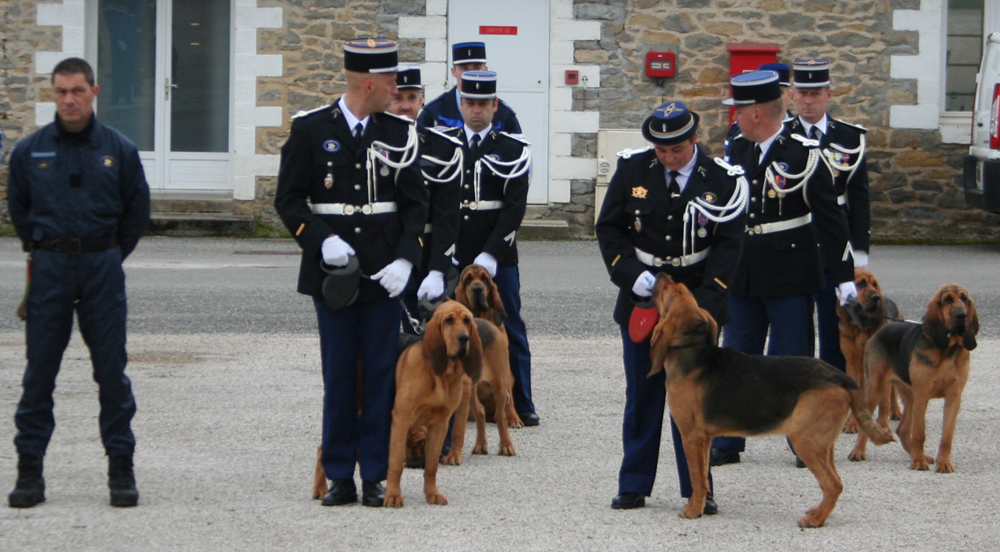
At home, that same drive means bloodhounds will eagerly chase any interesting smell—which is exactly why owners are advised to keep them leashed on walks and behind a sturdy, six-foot fence in the yard.
Bloodhound Health: Why Bloat Is the Breed's No. 1 Killer
The bloodhound's most serious health threat is gastric dilatation and volvulus (GDV), or bloat, a life-threatening emergency common in deep-chested breeds. In a 2004 Kennel Club health survey, bloat was the leading cause of death in bloodhounds at 34%, followed by cancer at 27%. The breed also suffers a higher-than-average incidence of eye, skin, and ear ailments, and its thick coat makes it prone to overheating in warm weather.
Bloodhounds can also be affected by hip and elbow dysplasia, hereditary joint conditions in which the bones don't align properly and grind together over time. Their floppy ears trap moisture, making ear infections a frequent concern, and their facial folds can develop dermatitis if not kept clean and dry.
Lifespan figures vary by source. A 2024 UK study found a life expectancy of 9.3 years for the breed, while PetMD cites an average of 10 to 12 years. Either way, preventive care—especially bloat awareness—matters enormously for this breed. Warning signs of bloat include a distended abdomen, retching without producing vomit, and signs of abdominal pain such as stretching or drooling; any of these warrants an immediate trip to the veterinarian.
Feeding and Grooming a Wrinkled Giant
Feeding a bloodhound is as much about preventing bloat as it is about nutrition. Veterinarians recommend splitting food into two to three smaller meals a day rather than one large meal, avoiding elevated food bowls, and keeping your dog calm—no vigorous exercise—around mealtimes. Depending on weight and activity level, an adult bloodhound typically eats 4 to 8 cups of dry food per day, ideally a large-breed formula matched to its life stage. Some vets may suggest joint-support supplements such as glucosamine and chondroitin for dogs with dysplasia, along with omega-3s for skin and coat health.
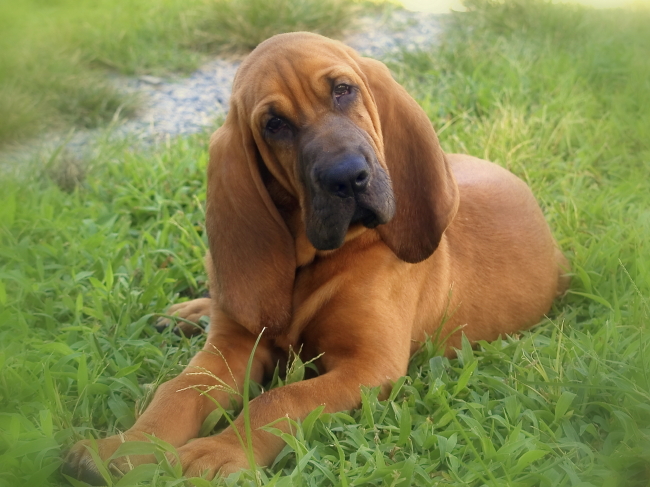
Grooming is relatively low maintenance. The short coat is a moderate shedder that benefits from weekly brushing and a bath every few months—more often if your hound rolls in something smelly. The real work is the daily upkeep of those signature folds and ears: wipe facial folds daily with a pet-safe wipe or damp cloth, and clean the ears routinely with a veterinary-approved cleanser, especially after baths or swimming.
Training the Independent Thinker: Patience Is Non-Negotiable
Bloodhounds are affectionate and eager to please in their own way, but they are also famously independent and can be stubborn during training. Positive reinforcement and consistency are essential, and harsh corrections don't suit this sensitive breed.
Two deeply ingrained behaviors are hard to train out. First, bloodhounds are among the most vocal breeds—their deep, rolling bay is how they "talk" to their pack, which can be a challenge in apartments or close-knit neighborhoods. Second, they are determined escape artists who will dig under or climb over fences to chase a scent, so a six-foot fence and outdoor supervision are strongly recommended.
For the right owner, the effort pays off. Bloodhounds thrive on long walks, hiking, and nose work, and once their physical and mental needs are met, they're happy to cuddle on the couch with their family.
Is a Bloodhound the Right Dog for You?
The bloodhound's gentle, patient nature makes it an excellent family dog, but this is not a low-effort breed. Owners should be prepared for daily exercise, consistent training, routine ear and fold care, and a home that can safely contain a determined, scent-driven escape artist. The breed also needs owners who recognize the signs of bloat and will act fast in an emergency.
If you can meet those needs, you'll be rewarded with a loyal, affectionate companion with one of the most remarkable noses on the planet—and a voice you'll never forget.
The Bottom Line: Bloodhound Essentials at a Glance
- Size: Roughly 80–110 pounds and 23–27 inches tall, with some sources listing up to 160 pounds.
- Origin: Descended from the hounds of the Abbey of Saint-Hubert in Belgium, with a recorded history reaching back to the 14th century.
- Superpower: Up to roughly 300 million scent receptors, the ability to follow days-old trails, and trailing evidence that has been accepted in court.
- Top health risk: Bloat (GDV), the leading cause of death at 34% in one survey; also watch for hip and elbow dysplasia, ear infections, and skin-fold dermatitis.
- Lifespan: About 9 to 12 years depending on the source.
- Care essentials: Two to three meals daily, weekly brushing, daily fold wiping, routine ear cleaning, and a securely fenced yard.