

Nearly 1,500 beagles that spent their lives in a Wisconsin breeding and research facility are finally experiencing freedom, as a massive nationwide rescue operation transfers them to shelters across the country where they will be rehabilitated and adopted into loving homes. The historic rescue from Ridglan Farms in Blue Mounds, Wisconsin, marks one of the largest beagle rescues in U.S. history and has reignited the national debate over animal testing.
Inside the Rescue: How 1,500 Beagles Were Freed From Ridglan Farms
Ridglan Farms, a USDA Class A dog breeder and Class R research facility located about 20 miles west of Madison, housed approximately 2,000 beagles bred for laboratory testing. For years, animal welfare activists had protested the facility's practices, alleging that dogs were kept in inhumane conditions. The breaking point came in mid-April 2026, when tensions erupted into violent confrontation.

On April 18, an estimated 1,000 animal welfare activists descended on Ridglan Farms attempting to gain entry to the facility. Law enforcement officers responded with tear gas, pepper spray, and rubber bullets to disperse the crowd, according to the Associated Press. Some activists managed to breach the perimeter and remove approximately 20 beagles before being stopped. The clash drew national attention, with news outlets across the country covering the dramatic standoff.
Timeline: From Protests to Historic Rescue Deal
The rescue unfolded rapidly over the course of just a few weeks. Here are the key moments that led to the beagles' freedom:
- April 18-19, 2026 — Hundreds of activists clash with police at Ridglan Farms. Officers deploy tear gas and rubber bullets. At least 20 beagles are removed by activists, some of which are intercepted and returned.
- April 20, 2026 — Animal rights activists sue Ridglan Farms and Dane County. Governor Evers faces growing pressure from protesters at the Wisconsin State Capitol demanding action.
- April 30, 2026 — The Center for a Humane Economy and Big Dog Ranch Rescue negotiate a confidential agreement to purchase 1,500 beagles from Ridglan Farms for an undisclosed price. The remaining ~500 dogs stay at the facility.
- May 3, 2026 — PBS NewsHour reports that Big Dog Ranch Rescue and the Center for a Humane Economy have finalized the purchase, with beagles beginning to be transferred to rescue organizations nationwide.
- May 7-8, 2026 — SPCA Westchester in New York receives 10 beagles. Shelters across Wisconsin, Iowa, and California begin receiving their第一批 dogs.
- May 10, 2026 — FOX6 reports that 1,000 beagles have been removed so far, with 500 more coming out that week — making the rescue ⅔ complete.
- May 11, 2026 — 45 beagles arrive at Wisconsin Humane Society in Green Bay. A busload of 16 beagles arrives in the Bay Area after a 2,000-mile journey from Wisconsin.
Why This Rescue Matters: The Bigger Picture Behind the Beagles
The Ridglan Farms rescue is more than just a feel-good story about dogs finding homes. It has exposed deep divisions over the role of animal testing in American research and the billions of taxpayer dollars that fund it.
Justin Goodman, senior vice president of White Coat Waste Project, a D.C. watchdog group calling on the government to stop funding animal experiments, told FOX6 Investigators: "The U.S. Government is the single largest funder of animal testing in the world."
Data obtained by White Coat Waste shows that in the past 14 months alone, the National Institutes of Health (NIH) approved $55 million for new dog and cat experiments and another $87 million for extensions to existing research — totaling $142 million in grants. Much of this funding came after the NIH's own acting deputy director, Nicole Kleinstreuer, stated in summer 2025 that she personally believes "we should not do research on dogs or cats" and called it "unconscionable."
Wayne Pacelle, President of the Center for a Humane Economy, one of the groups that paid to free the Ridglan beagles, emphasized that alternatives exist. "We have organs on a chip, we have organoids, we have AI," Pacelle said. "But now we need to have the actions match the rhetoric."
However, Paula Clifford of Americans for Medical Progress, a nonprofit funded in part by the biomedical research industry, defends the practice. "The animal studies are keeping human volunteers in clinical trials safe," she told FOX6. Of the nearly 43,000 dogs housed in U.S. laboratories in 2024, most were reported to experience minimal pain, though more than 12,000 were subjected to pain and distress on purpose.
Where Things Stand Now: Beagles Arriving at Shelters Nationwide
As of mid-May 2026, over 1,000 beagles have been successfully removed from Ridglan Farms. The dogs are being distributed to a network of rescue organizations and shelters across the country, where they receive medical care, behavioral assessment, and rehabilitation before being made available for adoption.
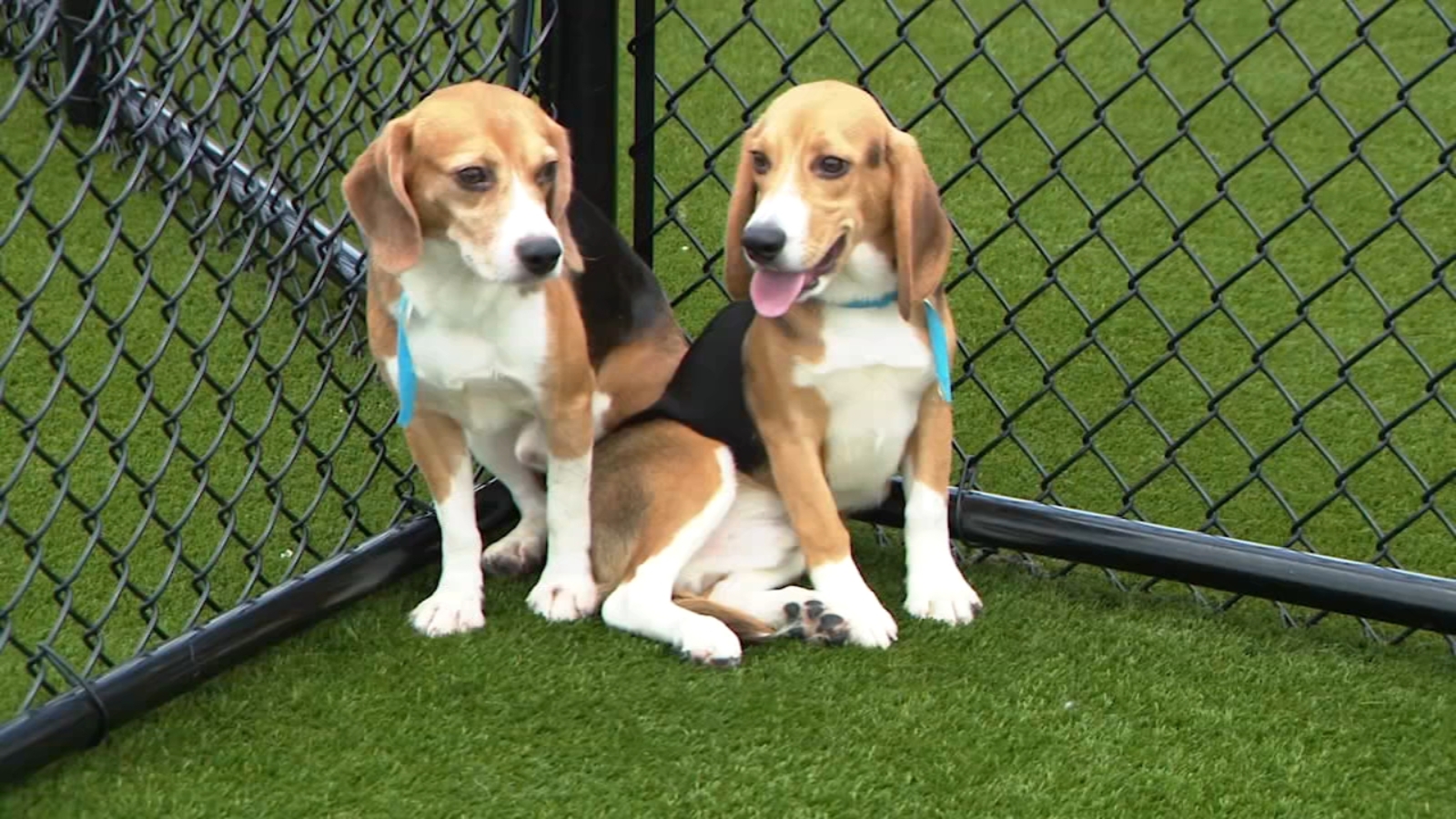
Among the shelters participating in the rescue effort:
- SPCA Westchester (New York) — 10 beagles arrived on May 7. "They've never had a treat, snuggled in a soft bed, so we're just thrilled to be a small part of this rescue," said CEO Shannon Laukhuf.
- Wisconsin Humane Society (Green Bay) — 45 beagles arrived May 11, ready for foster and adoption placement.
- Wisconsin Humane Society (Milwaukee) — 130 beagles expected to arrive soon.
- Dane County Humane Society — Coordinating transfer of about 500 dogs to partner shelters across the region.
- Bay Area, California — 16 beagles arrived via a school bus after a 2,000-mile journey from Wisconsin.
- Animal Rescue League of Iowa — 40 beagles set to arrive.
The rescued pups are currently undergoing medical evaluations and learning basic skills like walking on grass, eating treats, and socializing with people and other dogs — experiences many of them have never had in their lives confined to cages.
What Happens Next: The Road Ahead for Rescued Beagles and Animal Testing
For the beagles, the future is finally bright. Once medically cleared and behaviorally assessed, they will be placed for adoption through their respective shelters. Due to overwhelming public interest, several organizations, including Beagle Freedom Project, have already closed their adoption applications.
But advocates warn that the fight is far from over. Pacelle noted that Marshall Bioresources in upstate New York houses more than 16,000 beagles — "like another Ridglan Farms times eight." Goodman summed it up bluntly: "As long as they are requiring, strongly recommending and funding dog testing, it is going to continue and someone is going to pick up the slack if and when Ridglan winds down."
Congressman Mark Pocan (D-WI) has pressed HHS Secretary Robert F. Kennedy Jr. to investigate federal funding that flows to labs purchasing dogs from facilities like Ridglan. Kennedy initially assured Pocan that dog testing is "largely a thing of the past," but data obtained by FOX6 and White Coat Waste tells a different story. HHS later stated it "continues to engage with the Congressman on NIH's efforts to reduce and ultimately replace animal testing."
The Bottom Line: Key Points to Remember
- 1,500 beagles are being rescued from Ridglan Farms in Wisconsin after protests and negotiations
- Over 1,000 dogs had been transferred to shelters by May 11, 2026
- Multiple shelters nationwide are accepting beagles for medical care and adoption
- The rescue has sparked debate over the $142 million in NIH funding for dog and cat research approved in the past 14 months
- Adoption applications are closed at many organizations due to overwhelming interest, but prospective adopters should check with local shelters participating in the rescue