
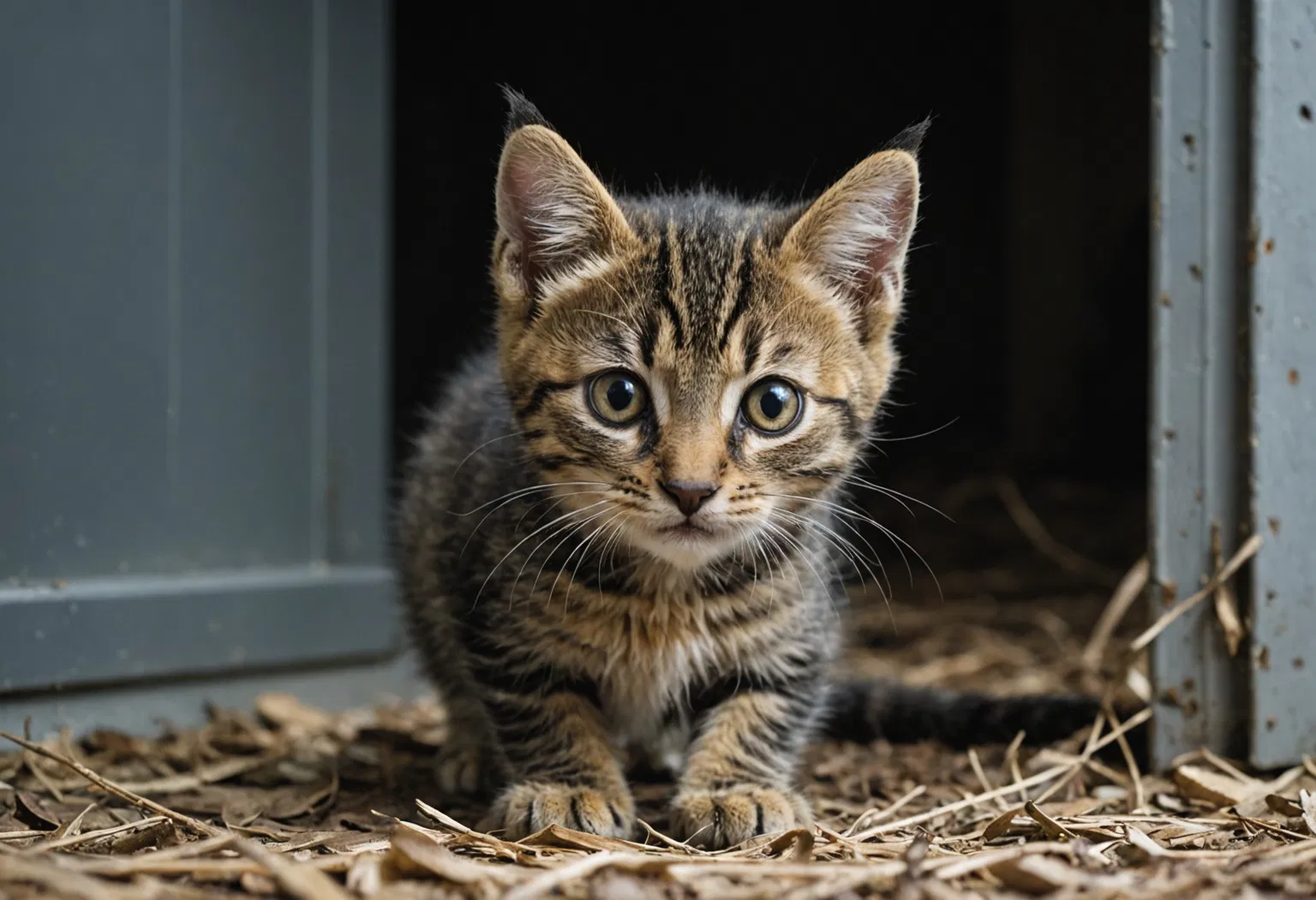
Sometimes the best travel stories don't end at a destination — they begin with a detour. That's exactly what happened when Virgil Wiebe, a law professor at the University of St. Thomas in St. Paul, Minnesota, missed his connecting flight at Chicago's O'Hare International Airport and stepped outside for a cigar break. What he found near Terminal 1 wasn't just a quiet moment to decompress — it was a tiny, dirty orange kitten that ran straight up to him and climbed onto his foot.
The kitten rescue story, first shared with NBC Chicago and later picked up by People, the Chicago Tribune and the St. Paul Pioneer Press, has become the latest viral chapter in what pet lovers affectionately call the "cat distribution system" — the internet's tongue-in-cheek explanation for how stray cats seem to appear in people's lives at exactly the right moment. Only this time, the system made its delivery at one of the busiest airports in the world.
How a Missed Flight Turned Into an Airport Adoption
Wiebe had been traveling home from a conference in New York City when his connection through Chicago fell apart. Stranded and waiting out a long delay, he stepped outside to enjoy a Macanudo cigar in a small garden near the terminal. That's when the kitten — estimated to be only about three weeks old — appeared out of nowhere.
"He was sort of at the height of cuteness, he was purring like a motor and immediately captured my heart," Wiebe said. The kitten made himself comfortable on Wiebe's foot and, quite literally, refused to let the professor leave without him.
Wiebe wasn't sure what the airport could do to help a small, stray traveler with fur and whiskers — was this a case for lost and found? — but the decision was quickly made for him. He texted his wife, who replied, "Can you bring him home?" Wiebe later admitted he didn't realize she was joking and took the message as a green light. "Now he's ours," he said.
With a new travel companion to accommodate, Wiebe did what any resourceful cat parent would do in 2026: he called in backup. His daughter arranged for a pet carrier, kitten formula and a bottle to be delivered straight to the airport through DoorDash. The airline then charged a $150 pet fee, and the kitten — newly named "Macanudo O'Hare" after the cigar that sparked the meeting, or "Harry" for short — flew home to Minnesota in the cabin.
From Cigar Break to Carry-On: How the Rescue Unfolded
The rescue came together in a matter of hours, but each step mattered for a kitten so young. Here's how the day played out:
- The encounter: Wiebe stepped outside Terminal 1 for a cigar break after missing his connection, and a three-week-old orange kitten ran toward him and climbed onto his foot.
- The green light: Wiebe's wife jokingly texted, "Can you bring him home?" — which he took as full approval.
- The supplies: His daughter ordered a pet carrier, kitten formula and a bottle through DoorDash, delivered directly to the airport.
- The ticket: The airline charged a $150 pet fee, and the kitten joined Wiebe in the cabin for the flight to St. Paul.
- The name: Wiebe named the kitten "Macanudo O'Hare," or "Harry" for short, after the cigar he was smoking when they met.
Why the 'Cat Distribution System' Keeps Striking at Airports
To animal lovers, this story is more than a one-off heartwarmer — it's the latest proof that the "cat distribution system" works in mysterious places, including an airport that serves tens of millions of travelers each year. Stray and feral cats have long found shelter in the landscaped areas and service corridors around major airports, where food scraps and quiet corners offer a fragile foothold for survival.
For a kitten estimated at just three weeks old, the timing was especially critical. Kittens this young are not yet weaned and typically depend on their mother's milk — or a kitten milk replacer fed from a bottle every few hours. They also can't regulate their own body temperature well, which is why immediate warmth and frequent feeding, exactly what Wiebe's DoorDash order provided, can mean the difference between a happy ending and a much sadder one.
The $150 pet fee is also worth noting for any traveler who finds themselves in a similar situation. Most major U.S. airlines allow small cats and dogs to travel in the cabin for a fee, provided the pet fits in an approved carrier that stows under the seat in front of you. Wiebe's story is a reminder that an in-transit rescue is possible — but it requires quick thinking, a compliant carrier, and a willingness to pay the airline's pet fare on the spot.
Settling Into St. Paul: Where Harry Is Now
Back home in Minnesota, Harry — full name Macanudo O'Hare — has traded airport landscaping for life in a warm St. Paul home. Photos shared with the Pioneer Press show a wide-eyed orange kitten reaching toward the camera, and Wiebe with his new cat at home, where the little traveler is settling into his new life.
Wiebe told reporters he was charged $150 for the cat's ticket, "and that was it." He has also mused about whether Harry may have belonged to another traveler who simply didn't want to pay two $150 pet fees — a small mystery that will likely never be solved.
What's Next for Macanudo O'Hare — and What Travelers Should Know
For Harry, the road ahead includes the typical milestones of kittenhood: weaning onto solid food, a first veterinary checkup, and — once he's old enough and big enough — vaccinations and neutering. Because he was found at roughly three weeks old, steady weight gain and careful monitoring will be especially important in the coming weeks.
For pet lovers and frequent flyers alike, the story doubles as a practical playbook. If you ever meet a stray animal at an airport, experts recommend contacting the airport's animal-control or lost-and-found office first to check for an owner. If you decide to adopt on the spot, have a plan for an airline-approved carrier, confirm the airline's in-cabin pet policy and fee before you board, and — for very young kittens — line up formula and a warm place to sleep as soon as you land.
The Bottom Line: Key Takeaways From This Kitten Rescue
- A University of St. Thomas law professor rescued a three-week-old orange kitten during a cigar break at Chicago O'Hare after missing his connecting flight.
- The kitten — named Macanudo O'Hare, or "Harry" — flew home to St. Paul for a $150 in-cabin pet fee.
- A quick DoorDash order delivered a pet carrier, kitten formula and a bottle straight to the airport.
- The rescue highlights both the "cat distribution system" phenomenon and the practical steps of flying home with a newly found pet.